
PreSonus Eris E4.5
4.5Editor score
50 Watts Class AB amplification
Front panel headphone output
High and low frequency tuning
Finding the right Edm Studio Monitor is crucial for any music producer seeking accurate sound reproduction. These speakers reveal every detail in your mix, ensuring your tracks translate well across different listening environments. Whether you are mixing hip hop or electronic dance music, precise monitoring helps you make better decisions.
We evaluated ten leading models based on sound quality, build durability, connectivity options, and value for money. Our analysis considers frequency response, amplifier power, and room tuning features that matter most in a home studio setting. Each product was selected to represent a different budget tier and use case for clarity.
Every pick in this list shows specific strengths tailored to various production needs and room sizes. Prices fluctuate often on major retail platforms so check current listings before purchasing. We aim to provide clear insights so you can invest confidently in gear that supports your creative workflow effectively.
4.5Editor score

4.8Editor score

4.8Editor score
As an Amazon Associate we earn from qualifying purchases.
The following table offers a side-by-side comparison of all ten monitors ranked by their overall performance and value. We highlight key specifications such as driver size, amplifier type, and connectivity options to help you quickly identify the model that fits your studio needs and budget constraints.


The PreSonus Eris E7 XT stands out as a top choice for producers needing accurate sound in a home studio. With a high rating of 4.8 stars from verified users, it delivers studio-quality audio that reveals subtle details in your mix. The EBM waveguide ensures a wide listening area so you can move around without losing clarity.
We may earn a commission when you buy through this link, at no additional cost to you.
This monitor features a 6.5-inch woven composite woofer that provides deep lows without muddying the midrange. The 1.25-inch silk dome tweeter handles high frequencies smoothly, reducing listening fatigue during long sessions. Acoustic tuning controls on the back let you adjust levels to match your room boundaries for better accuracy.
While it is a single unit sold separately, the included software suite adds significant value beyond the hardware. You get Studio One Prime and a plug-in suite worth over a thousand dollars which helps new producers get started quickly. The only minor trade-off is the size which requires a dedicated desk or stand.
If you are looking for a reliable monitor that balances performance and features the E7 XT is an excellent investment. It suits electronic music producers who need precise bass definition and clear highs for synth layers. We recommend this model for anyone ready to upgrade from consumer speakers to professional grade audio.
The EBM waveguide technology creates a wider sweet spot allowing for consistent sound quality from different angles during collaboration.
Studio One Prime and the magic plug-in suite provide essential tools for recording and mixing right out of the box.
We may earn a commission when you buy through this link, at no additional cost to you.
The PreSonus Eris E4.5 offers exceptional value for producers on a tight budget without sacrificing essential monitoring quality. Rated 4.5 stars it delivers accurate sound perfect for music production and multimedia reference in smaller spaces. The woven composite woofers ensure tight bass that you can feel despite the compact size.
We may earn a commission when you buy through this link, at no additional cost to you.
At just fifty watts of Class AB amplification these monitors punch above their weight in terms of volume and clarity. The front panel headphone output is convenient for quick checks without disturbing others in the room. High and low frequency tuning controls allow you to adapt the sound to your specific listening environment.
While they lack the raw power of larger speakers the E4.5s are ideal for near-field monitoring on a desk. The limitation in sub-bass detail is acceptable given the price point and size constraints. You can always add a subwoofer later if you need more low-end extension for deeper genres.
We recommend this pair for beginners or those with limited desk space who need reliable monitoring. It is a solid entry point into professional audio that grows with your skills. The balance of features and cost makes it one of the best choices in the budget category.
These monitors fit comfortably on small desks while still providing the accuracy needed for precise mixing decisions.
Inputs include TRS RCA and a front aux jack allowing you to connect phones and computers easily.
We may earn a commission when you buy through this link, at no additional cost to you.
The YAMAHA Hs5 is a staple in professional studios worldwide known for its honest and uncolored sound reproduction. With a 4.8 star rating it emphasizes sonic purity ensuring what you hear is exactly what is in your mix. This transparency is vital for making critical decisions during mastering and mixing processes.
We may earn a commission when you buy through this link, at no additional cost to you.
Powered by a 70 watts bi-amp system these monitors deliver dynamic range and clarity across the frequency spectrum. The white cone woofer is designed to provide visual feedback while the dome tweeter handles highs with precision. XLR and TRS inputs accept both balanced and unbalanced signals for versatile studio integration.
While the price is higher than entry-level models the build quality and consistency justify the investment for serious producers. You may need room treatment to get the best out of them but the baseline accuracy is excellent. They are less forgiving of poor mixing habits which forces you to improve your craft.
If you want monitors that will last for years and translate well to other systems the HS5 is a top pick. It is ideal for producers who prioritize accuracy over features like Bluetooth or extra connectivity. This model sets a high bar for what a premium studio monitor should deliver.
The design focuses on minimizing coloration so you can trust your ears to make the right creative choices.
Built with durability in mind these speakers withstand daily studio use while maintaining consistent performance.
We may earn a commission when you buy through this link, at no additional cost to you.
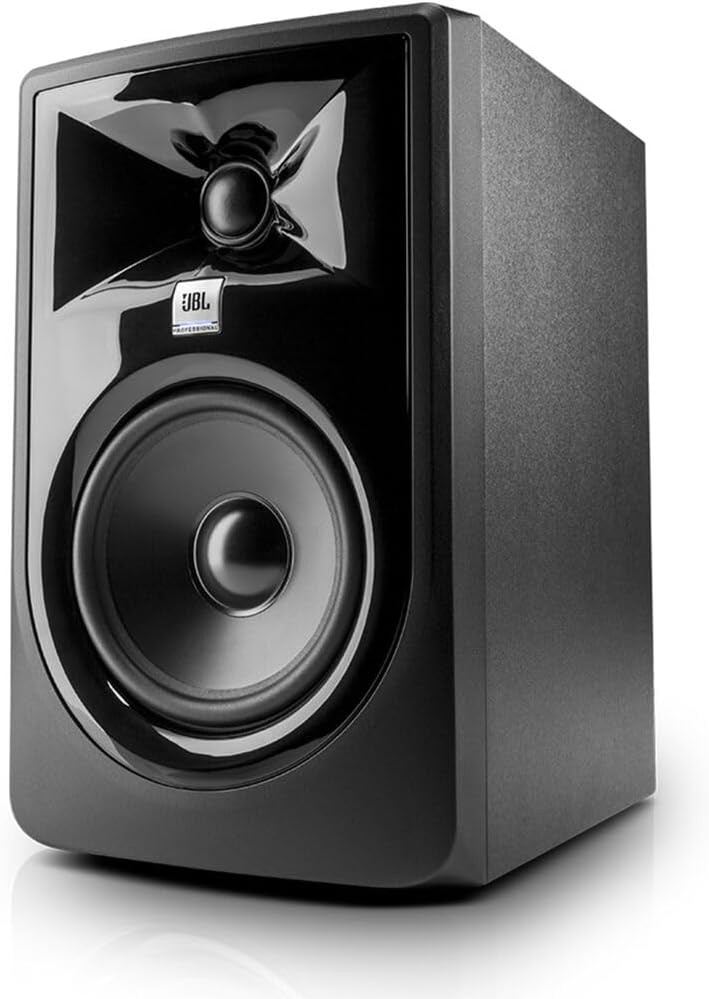
The JBL 305P MkII delivers crystal clear imaging through its patented Image Control Waveguide technology. Rated 4.7 stars it is ideal for music production and podcasting where stereo imaging matters. The waveguide ensures a wide sweet spot so you can hear your mix accurately from various angles.
We may earn a commission when you buy through this link, at no additional cost to you.
Powered by 82 watts of Class-D amplifiers these monitors provide dynamic range and deep bass via a 5-inch woofer. The Slip Stream port reduces turbulence for cleaner low-end performance even at higher volumes. Boundary EQ and HF Trim adjustments let you tailor the sound to suit any room acoustics.
While it lacks the extensive software bundle of competitors the hardware performance is robust and reliable for the price. The MDF enclosure is rigid to reduce unwanted resonance during playback. Some users might find the knobs less premium than metal alternatives but functionality remains solid.
This model is a great choice for content creators needing detailed imaging for audio or video editing. It balances performance and affordability well making it a popular option in the mid-range market. If precise stereo placement is your priority these monitors are hard to beat.
The unique waveguide design expands the listening area so collaborators hear the same balanced sound.
Boundary EQ helps adjust low frequencies when speakers are placed near walls for better accuracy.
We may earn a commission when you buy through this link, at no additional cost to you.
The Edifier MR3 brings Hi-Res Audio certification to a compact design perfect for versatile studio setups. With a 4.5 star rating it delivers a flat response ideal for music creation or everyday listening. The multi-point Bluetooth connection allows you to switch between devices seamlessly without unplugging.
We may earn a commission when you buy through this link, at no additional cost to you.
Featuring 36 Watts RMS output and balanced TRS RCA and AUX inputs it supports simultaneous connections for flexibility. The EDIFIER ConneX app offers in-depth adjustments and personalized EQ control to fine-tune your sound precisely. You can switch between Music Monitor and Custom modes to suit different needs.
While the power output is lower than larger models the sound remains rich and full-range for near-field use. The compact size makes it easy to fit on desks without dominating the space. Smaller drivers limit deep bass but for monitoring vocals and instruments it performs admirably.
This monitor is best for those who value connectivity and app control in a smaller package. It fits well in multi-use rooms where speakers double for casual listening and production. If you need wireless convenience alongside professional features the MR3 is a strong contender.
The ConneX app provides advanced EQ settings to adapt the sound to your specific room acoustics.
Multiple inputs let you connect computers phones and audio interfaces all at once without switching cables.
We may earn a commission when you buy through this link, at no additional cost to you.
The Ortizan C7 pairs modern wireless convenience with professional features like balanced inputs. Rated 4.6 stars these monitors capture digital audio directly via USB minimizing signal loss during conversion. The Bluetooth 5.3 technology ensures stable pairing with your smartphone or tablet in just seconds.
We may earn a commission when you buy through this link, at no additional cost to you.
Featuring a 24-bit DAC and professional tuning these speakers deliver balanced sound across high mid and low frequencies. The carbon fiber speaker and silk dome tweeter combination provides precise clean mid-low frequencies and transparent highs. It is ideal for accurate audio monitoring while creating content on a budget.
While the brand is less established than traditional audio giants the performance competes well with similar price points. The balanced TRS input allows connection to professional equipment like mixing consoles. Limited room tuning means you may need to place them carefully for the best results.
This model is perfect for creators who want wireless streaming without losing the ability to connect wired gear. The affordable price makes it accessible for those new to production. If you need versatile speakers that bridge casual and professional use the C7 is a smart pick.
Enjoy seamless Bluetooth streaming or connect to interfaces using the balanced input for critical listening.
Dozens of laboratory adjustments ensure a flat curve required by monitor speakers for faithful reproduction.
We may earn a commission when you buy through this link, at no additional cost to you.
The KALI AUDIO LP-6 V2 offers superior sonic accuracy with a robust DSP system for flat frequency response. Rated 4.5 stars this single studio speaker emits sounds as they are in your mix without alterations. The low noise front port minimizes turbulence for clear sounds without chuffing or hissing.
We may earn a commission when you buy through this link, at no additional cost to you.
Powered by 80 watts bi-amped power these monitors deliver 115dB Max SPL and a frequency range of 47Hz to 21kHz. The updated boundary EQ ensures high-quality audio output regardless of placement on a stand or against a wall. This makes them super adaptable to various studio environments.
While sold as a single unit the performance is well above its price point for detailed monitoring. The low distortion upgrades ensure you hear every nuance in your track. You will need to buy a pair separately but the consistent sound quality justifies the extra cost.
If you need detailed sound without breaking the bank this model is an outstanding choice. It suits electronic music producers who rely on precise low-end and midrange clarity. We recommend this for those seeking professional monitoring capabilities at a competitive value.
The front port lets air exit at uniform velocity reducing unwanted noise during loud playback.
Boundary EQ helps you tune the sound whether monitors sit on a desk or a stand.
We may earn a commission when you buy through this link, at no additional cost to you.
The Edifier MR5 brings studio-grade sound with a 3-way active crossover system and 110W RMS power. Rated 4.5 stars it supports 24-bit/96kHz wired and wireless audio for crystal-clear high-resolution sound. The dimpled tweeter waveguide ensures consistent sound quality across a wider listening area.
We may earn a commission when you buy through this link, at no additional cost to you.
Physical rear knobs allow you to tailor the sound to your space using High and Low Frequency adjustments. The EDIFIER ConneX App adds advanced room compensation features like Low Cut and Desktop Control. This dual control method offers flexibility for both quick tweaks and detailed calibration.
While the price is higher the power output fills mid-sized rooms without sacrificing tonal balance or audio clarity. The MDF cabinets reduce distortion and resonance significantly for cleaner playback. The larger footprint requires more desk space but delivers superior volume and detail.
This monitor is ideal for producers needing high power and wireless convenience in a single package. It suits those who want Hi-Res audio support without sacrificing monitoring accuracy. If you need speakers that double as high-quality listeners the MR5 is a top choice.
Supports LDAC for high quality wireless streaming that maintains fidelity during reference listening.
Choose between physical knobs and app settings for flexible room calibration tailored to your needs.
We may earn a commission when you buy through this link, at no additional cost to you.
The Mackie CR4.5BT combines studio-quality sound with a tone control and Bluetooth making it versatile for many uses. Rated 4.7 stars these monitors offer a transparent response that you can shape for gaming or casual listening. The tone knob adds bass or high-end sparkle without changing the core monitor quality.
We may earn a commission when you buy through this link, at no additional cost to you.
A location switch optimizes the speakers for desktop mode when close or bookshelf mode for distance. Silk dome tweeters and 4.5-inch woven woofers provide clean sound with plenty of low end. Built-in headphone output allows for private listening sessions without disturbing others in the room.
While the tone control might color sound slightly it adds flexibility for content creation and enjoyment. It is less focused on strict acoustic accuracy than pure studio monitors but remains a great reference tool. The Bluetooth makes it easy to play reference tracks from a phone.
If you want monitors that can adapt from production to partying this pair fits well. It suits streamers and gamers who also need accurate sound for editing. We recommend this for creators who value versatility and user-friendly controls.
Switch between desktop and bookshelf modes to optimize sound for your specific placement and distance.
The tone knob lets you boost bass or sparkle for immersive listening without losing clarity.
We may earn a commission when you buy through this link, at no additional cost to you.
The Yamaha HS8 delivers deep lows with an 8-inch cone woofer and 120 Watts power amplification. Rated 4.6 stars it features a frequency response from 38Hz to 30kHz which captures sub-bass details many speakers miss. The Advanced Magnetic Circuit design ensures efficient performance and consistent sound.
We may earn a commission when you buy through this link, at no additional cost to you.
This pair offers the classic white cone look and build quality expected from Yamaha professional equipment. The high power handling allows for loud monitoring without distortion which is useful for checking dynamics. It is a trusted standard in studios worldwide for its reliability and accurate reproduction.
While it requires significant space and a higher investment the detail in the low end is unmatched. You need enough room to let the drivers breathe for best results. The price reflects its pro-grade status but is worth it for serious music production.
If you need full frequency coverage including deep sub-bass these are a top tier choice. They suit professional producers who demand the highest level of detail in their mixes. We recommend these for dedicated studios where space and budget allow for larger speakers.
The 38Hz lower limit captures deep bass frequencies essential for electronic and hip-hop production.
Advanced magnets ensure efficient power use and consistent performance across the frequency range.
We may earn a commission when you buy through this link, at no additional cost to you.
Selecting the right Edm Studio Monitor requires understanding your room size budget and specific production needs. We break down the key factors that influence sound quality and usability to help you make an informed decision.
Driver size determines how much air a monitor can move which affects bass response and volume capacity. Larger drivers like 8-inch models offer deeper lows while smaller ones like 4-inch models fit smaller desks better. Power in watts matters for headroom ensuring you can listen clearly without distortion during loud sections.
Choose a driver size that matches your room dimensions and listening distance to avoid overwhelming or underwhelming your space.
Frequency response indicates the range of sounds a monitor can reproduce accurately. Look for a wide range like 38Hz to 20kHz or higher to ensure you hear all details from sub-bass to high hats. Flat response is crucial for making honest mixing decisions without coloration masking issues.
Prioritize models with a flat response curve for production tasks to ensure your mixes translate well to other systems.
Active monitors have built-in amplifiers which simplify setup and ensure proper power matching for each driver. Bi-amped designs provide separate amps for lows and highs enhancing clarity and reducing distortion during playback. Class D amps are efficient and cool while Class AB offers warm sound with higher power draw.
Select active bi-amped monitors for professional work to ensure consistent power delivery across the frequency spectrum.
Room tuning controls allow you to adjust frequency levels to compensate for room boundaries and acoustics. Features like boundary EQ help reduce bass buildup when speakers are placed near walls for better accuracy. Without proper tuning even great speakers can sound muddy or unbalanced in your specific space.
Look for monitors with adjustable acoustic controls to adapt the sound to your unique room environment.
Connectivity determines how easily you can integrate monitors into your existing studio setup. Balanced inputs like XLR or TRS reduce noise and interference over longer cable runs. Unbalanced RCA inputs suit consumer devices while headphone outputs offer convenient private monitoring without disconnecting speakers.
Ensure your monitors have inputs that match your audio interface and other gear for seamless integration.
Construction materials impact resonance and durability during daily use in a studio environment. MDF cabinets are rigid and reduce unwanted vibrations that can color the sound during playback. Metal grilles and sturdy knobs add longevity ensuring the monitors withstand frequent adjustments and transport if needed.
Invest in monitors with solid cabinet construction to minimize distortion and ensure long-term reliability.
Budget constraints often dictate which monitors are accessible but value extends beyond just the sticker price. Consider included software bundles warranty coverage and resale value when comparing different options. Sometimes paying slightly more for pro gear saves money in the long run by avoiding replacements.
Balance upfront cost with long-term benefits to find a monitor that fits your budget without compromising quality.
The sweet spot is the area where sound is most accurate and imaging is precise for mixing. Waveguide technology often expands this area allowing for better collaboration and movement without losing clarity. Wide imaging ensures instruments are placed correctly in the stereo field during your production work.
Prioritize monitors with wide sweet spots if you share your studio space or move around often while mixing.
Position your monitors so the tweeters are at ear level and form an equilateral triangle with your listening position. This setup ensures you receive the most accurate stereo image and frequency response for precise mixing decisions. Keep speakers away from corners to reduce bass buildup and improve overall clarity.
Connect using balanced cables whenever possible to minimize noise and interference during signal transmission. Avoid running audio cables parallel to power lines which can cause humming or buzzing in the audio path. Regularly check connections for wear and replace cables that show signs of damage or loose contacts.
Dust and humidity can affect internal components so keep monitors covered when not in use in dusty environments. Clean surfaces with a soft dry cloth to remove dust without scratching the finish or affecting ventilation. Allow adequate space around vents to prevent overheating and ensure consistent amplifier performance.
Studio monitors are designed to provide a flat frequency response that reveals details without coloring the sound. Regular speakers often boost bass or treble to make music sound more enjoyable which can hide mix issues. This accuracy helps producers make better decisions during mixing and mastering work.
Most modern studio monitors are active meaning they have built-in amplifiers so no separate amp is needed. They require only a connection to an audio interface or mixer with a line-level output. Passive monitors exist but are rare today and require external amplification to function properly.
Place monitors so the tweeters are at ear level and angled inward toward your listening spot. Form an equilateral triangle between the two speakers and your head for optimal stereo imaging. Keep speakers away from walls if possible to reduce bass resonance and room reflection issues.
For small rooms monitors with 4 to 5 inch drivers are ideal to avoid overpowering the space. Larger drivers can create bass buildup in small rooms making mixes sound muddy. Small monitors still offer accuracy when placed correctly for near-field monitoring purposes.
Yes studio monitors can be used for casual listening but they may sound less exciting than consumer speakers. They reveal all details including recording flaws which might not be enjoyable for relaxed listening. If you prefer boosted bass or treble consumer speakers might suit casual use better.
Acoustic treatments help reduce reflections that distort sound and hide mix issues during production work. While monitors work without treatment they perform best in treated rooms with controlled acoustics. Panels and bass traps absorb energy improving clarity and translation to other listening environments.
We have reviewed ten top Edm Studio Monitor options ranging from budget-friendly choices to professional-grade systems. Each pick offers unique strengths in sound accuracy power and connectivity to suit different production environments and needs. Whether you need deep bass or wide imaging there is a model here for your workflow.
Prioritize monitors with flat frequency response and reliable build quality to ensure your mixes translate well. Consider your room size and available space when choosing driver size to avoid acoustic issues during playback. Investing in good monitoring early saves time by catching mix errors before they become costly fixes.
Prices for these monitors fluctuate based on sales and availability so check current listings before finalizing your purchase. Keep an eye on bundle deals that may include software or accessories to add extra value. With the right pair you will have the foundation needed to create professional sounding music.