
JOYO Guitar Audio Interface for Phone
4.2Editor score
Zero latency direct monitoring
Pocket-sized portable design
Plug and play setup
This guide compares the top guitar to Mac interfaces for recording music and vocals with high fidelity, low latency, and seamless connectivity for musicians.
Connecting your guitar to a Mac for recording requires a reliable interface that captures every nuance of your playing. These devices convert analog signals into digital data with high fidelity, ensuring your tracks sound professional and polished. Choosing the right one depends on your specific needs, whether you are a beginner or a seasoned producer.
We evaluated ten top-rated audio interfaces based on sound quality, latency, connectivity options, and software inclusion. Each product was assessed for its ability to handle instrument inputs, microphone preamps, and monitoring features. This list covers a wide range of budgets and use cases, from portable pocket-sized adapters to full studio-grade units.
Each pick highlights key specifications, pros, and cons to help you make an informed decision. You will find detailed reviews, a comparison table, and a buying guide to simplify your search. Please note that availability and pricing can change frequently, so check the latest details before purchasing your ideal interface.
4.2Editor score
4.6Editor score

Here is a side-by-side comparison of the top ten guitar to Mac interfaces available this month. This table helps you quickly identify the right model for your recording needs by highlighting key features and specifications.




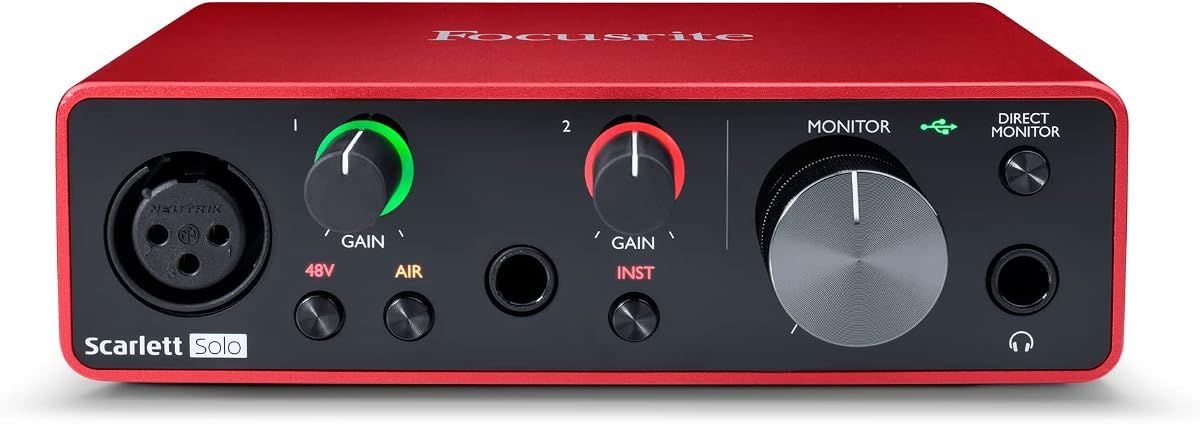
The Focusrite Scarlett Solo 3rd Gen is a top-tier USB-C audio interface designed for musicians seeking professional sound quality. It boasts a high rating for its superior pre-amps and seamless integration with Mac systems. Users appreciate its ability to capture clear vocals and guitar tracks without unwanted noise.
We may earn a commission when you buy through this link, at no additional cost to you.
This interface stands out with its switchable Air mode, which adds brightness and clarity to acoustic recordings. The Gain Halos provide visual feedback to prevent clipping during recording sessions, ensuring optimal levels. High-headroom instrument inputs allow guitars and basses to shine through without distortion, making it versatile for various styles.
While it offers only one instrument input, which may limit multi-instrument recording, this is acceptable for solo artists. The lack of digital I/O means expansion is not possible, but for home studios, this is rarely an issue. These trade-offs are minimal considering the price point and sound quality delivered.
This interface is ideal for beginners and intermediate musicians who need reliable studio-quality recording tools. It comes with essential software like Pro Tools Intro and Ableton Live Lite to jumpstart production. We recommend it for anyone serious about music production who values sound clarity and ease of use.
The high-performing mic pre-amps achieve a brighter recording quality that captures intricate details.
Gain Halos ring around the input level to indicate when you are hitting the ideal recording range.
We may earn a commission when you buy through this link, at no additional cost to you.
The M-AUDIO M-Track Duo is a versatile USB audio interface that covers recording, podcasting, and live streaming needs. It delivers pristine 48kHz audio resolution suitable for most home recording projects. Its transparent Crystal Preamps ensure optimal sound from various microphones, including condenser types.
We may earn a commission when you buy through this link, at no additional cost to you.
This interface offers two combo XLR and Line inputs, allowing flexibility for recording vocals and instruments simultaneously. The USB/Direct switch enables fuss-free monitoring with zero latency, which is crucial for live performance. Additionally, the included MPC Beats software provides essential production tools for creating tracks.
While the maximum sample rate of 48kHz is lower than studio standards, it remains sufficient for demos and demos online content. The build quality feels less robust compared to higher-end models, but it remains reliable for regular use. These limitations are minor given the accessible price and functional feature set.
This interface is perfect for hobbyists, podcasters, and content creators on a tight budget. It is easy to set up and use for beginners who need a reliable audio solution. We suggest it for those looking to start recording without a significant financial investment.
Transparent Crystal Preamps guarantee optimal sound from all your microphones including condenser mics.
A USB/Direct switch allows for zero latency monitoring so you can hear your performance clearly.
We may earn a commission when you buy through this link, at no additional cost to you.
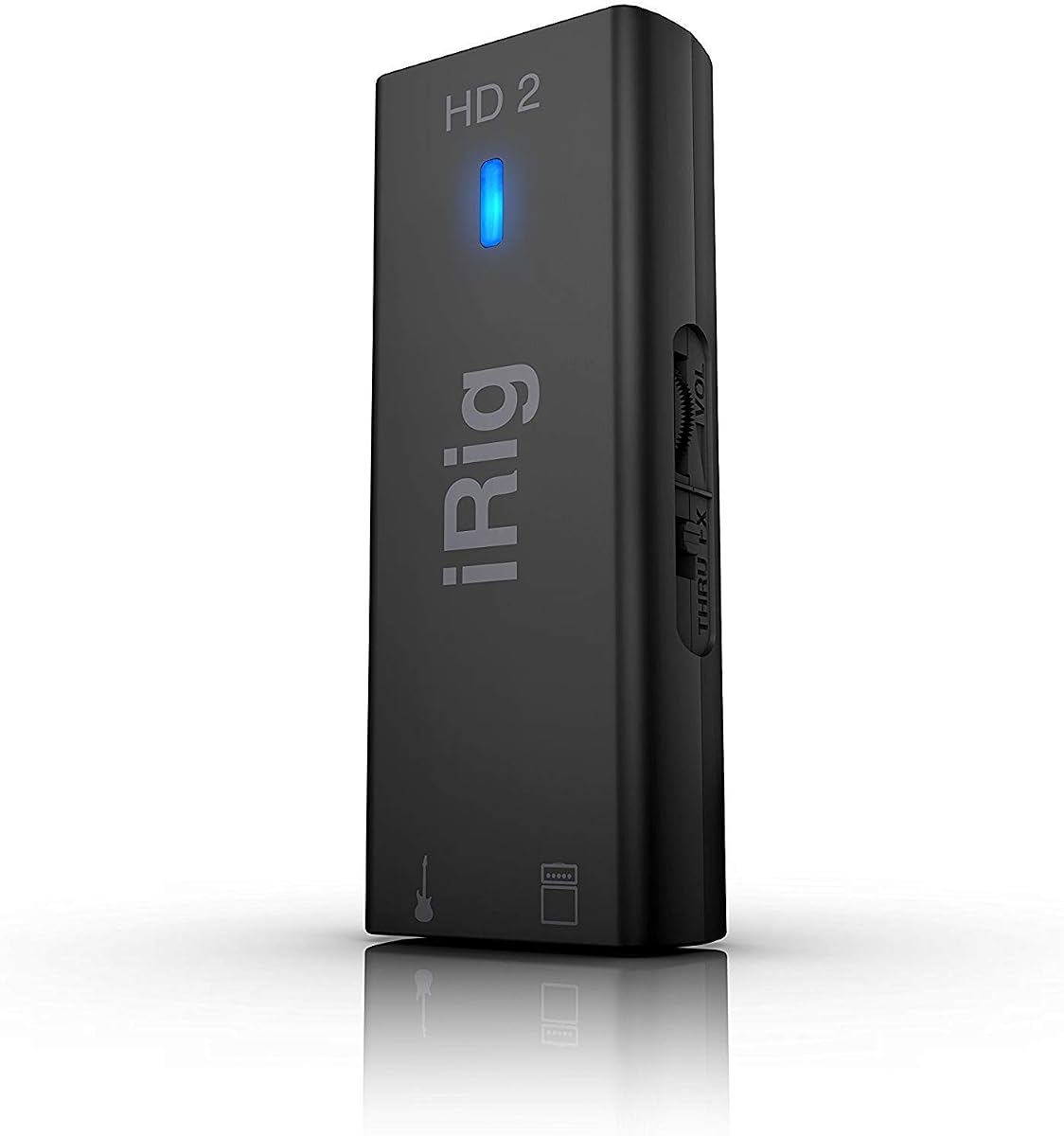
The IK Multimedia iRig HD 2 is a high-definition digital guitar interface designed for recording on iPhone, iPad, and Mac. It features a remarkable 96kHz sampling rate that sets it apart in its class for detail and clarity. Musicians appreciate its plug-and-play simplicity across multiple devices and operating systems.
We may earn a commission when you buy through this link, at no additional cost to you.
This interface allows you to connect directly to an amplifier without extra accessories, thanks to its dedicated Amp Out jack. You can toggle between FX and Thru settings to play through effects or monitor your dry signal. The headphone output includes a preamp and level control for silent practice sessions anytime.
Cable compatibility requires attention as it relies on specific connectors which may need adapters for different ports. The lack of a direct volume knob on the unit means you must rely on your device or guitar for level adjustments. These minor inconveniences do not overshadow the quality of recording it provides.
This interface is ideal for mobile musicians and iOS users who need a reliable recording tool on the go. It unlocks exclusive content in amplitude software for enhanced production capabilities. We recommend it for guitarists who want high-quality recordings without complex setup.
A 96kHz sampling rate ensures the highest clarity for your recordings without sacrificing performance.
Lightweight construction allows for portability so it fits easily in your pocket or laptop bag.
We may earn a commission when you buy through this link, at no additional cost to you.
The JOYO MOMIX CAB is a direct monitoring audio interface perfect for guitarists on the move. It passes your guitar's clean signal to headphones with zero latency while sending audio to your phone for recording. This design makes it ideal for capturing song ideas anywhere inspiration strikes.
We may earn a commission when you buy through this link, at no additional cost to you.
This device is smaller than a key and clips securely to your pocket or belt for secure carrying. It operates without batteries or drivers, requiring only a connection to your phone's USB-C or Lightning port. The signal indicator light provides visual feedback to ensure your input levels are optimal.
The dry signal cannot be muted, which means you hear your unprocessed guitar alongside app audio constantly. Android users may need to enable OTG settings manually, and not all models are guaranteed to work. These constraints are acceptable considering its primary goal of extreme portability and simplicity.
This interface is best suited for travelers and buskers who need to record quickly without setup. It allows you to capture ideas without carrying bulky gear or software. We suggest it for anyone prioritizing convenience and mobility in their music creation process.
Your guitar clean signal is passed straight to the headphone output with zero latency.
The back clip design allows you to attach it to a pocket or strap for mobile recording.
We may earn a commission when you buy through this link, at no additional cost to you.
The PIYONE 2X2 audio interface offers studio-quality recording with high-fidelity 24-bit 192kHz resolution. It features an elegant design with illuminated control rings that enhance visibility in dimly lit studios. This interface supports versatile XLR/TRS combo inputs and is class-compliant for easy Mac connectivity.
We may earn a commission when you buy through this link, at no additional cost to you.
It includes a Monitor Mix and Loopback function which streamlines streaming and podcast workflows. The one-cable setup handles both data transfer and bus power, eliminating bulky external power supplies. Additionally, the built-in 3.5mm headphone jack ensures compatibility with standard headsets without adapters.
In bright light the fixed LED light rings may be less visible than rotary knobs with larger markings. Software support is class-compliant which limits custom control compared to proprietary driver-based interfaces. These trade-offs are minor given the high quality and stylish appearance of the unit.
This interface is perfect for creators who value both aesthetics and performance in their setup. It is versatile enough for recording vocals and instruments or running online streams. We recommend it for anyone seeking a modern looking device with professional audio capabilities.
Capture every nuance with professional resolution and a wide dynamic range for clear audio.
Direct Monitor feature allows for silent zero-latency tracking with standard headsets.
We may earn a commission when you buy through this link, at no additional cost to you.
The Motu M2 is a premium USB-C audio interface known for its superb analog sound and high performance. It utilizes ESS Sabre32 Ultra DAC technology which is found in interfaces costing thousands of dollars. This results in an impressive 120 dB dynamic range on outputs and low noise mic inputs.
We may earn a commission when you buy through this link, at no additional cost to you.
This interface provides the same converter technology used in high-end studio gear ensuring professional audio capture. The ESS-driven headphone output delivers powerful and clear monitoring for critical listening. Its build quality and design reflect its status as a top-tier device for serious musicians.
The higher price point may be a barrier for beginners on a strict budget. While it excels in hardware, the included software is minimal compared to competitors offering full DAW suites. These factors are acceptable for those prioritizing pure sound quality over bundled extras.
This interface is ideal for professionals and audiophiles who demand the highest fidelity recording standards. It is reliable for both Mac and PC systems and delivers clear sound for production. We recommend it for users who need studio-grade performance at home.
Measured 120 dB dynamic range on outputs for capturing subtle details and loud peaks.
ESS-driven headphone output ensures you hear every nuance of your tracks.
We may earn a commission when you buy through this link, at no additional cost to you.
The PreSonus Quantum ES 2 features high-performance converters and custom low-latency drivers for excellent signal flow. It includes MAX-HD mic preamps that are transparent and digitally-controlled to suit popular microphones. Guitarists appreciate that the instrument input was co-developed with Fender engineers for optimal tone.
We may earn a commission when you buy through this link, at no additional cost to you.
This interface offers an Auto Gain button that sets the perfect level for microphones and instruments automatically. It comes with a perpetual license for Studio One Pro software which aids in recording and mixing. Additionally, Loopback audio makes creating monitor and streaming mixes quick and easy for content creators.
While the Auto Gain is convenient, it may not always suit nuanced recordings requiring manual precision. The reliance on Universal Control app for some functions means you need to navigate software menus. These are minor issues considering the robust hardware and included software value.
This interface is perfect for musicians and streamers who want seamless integration with production software. It is designed for fast sessions without friction and high-quality recording. We suggest it for those who value ease of use and professional tone options.
An Auto Gain button sets the perfect gain level for your microphones and instruments automatically.
Includes a perpetual license for Studio One Pro to help you record, mix, and master easily.
We may earn a commission when you buy through this link, at no additional cost to you.
The Fender Quantum HD 2 is an ultra-high-fidelity USB-C audio interface designed for professional studios and creators. It features 20 inputs and 24 outputs including ADAT expansion for hybrid studio growth. This model includes MAX-HD mic preamps and front-facing instrument inputs optimized for transparent guitar and bass recording.
We may earn a commission when you buy through this link, at no additional cost to you.
It comes with a perpetual license for Fender Studio Pro which provides a complete suite for recording and performing. Dual re-amp outputs allow you to explore new tones with external amps and pedals. The DSP monitor mixer and loopback routing streamline streaming and latency-free monitoring tasks.
The sheer number of connections can be overwhelming for those just starting their journey. The higher cost reflects its professional status which may not be necessary for simple setups. These factors are acceptable for serious producers needing a comprehensive and scalable audio solution.
This interface is ideal for studios that need expansion options and top-tier sound quality. It supports both Mac and PC and provides reliable performance for complex tasks. We recommend it for professionals who want a single device to handle all audio needs.
ADAT expansion adds sixteen digital inputs for hybrid studio growth and flexibility.
Dual re-amp outputs let you explore new tones with amps and external gear.
We may earn a commission when you buy through this link, at no additional cost to you.
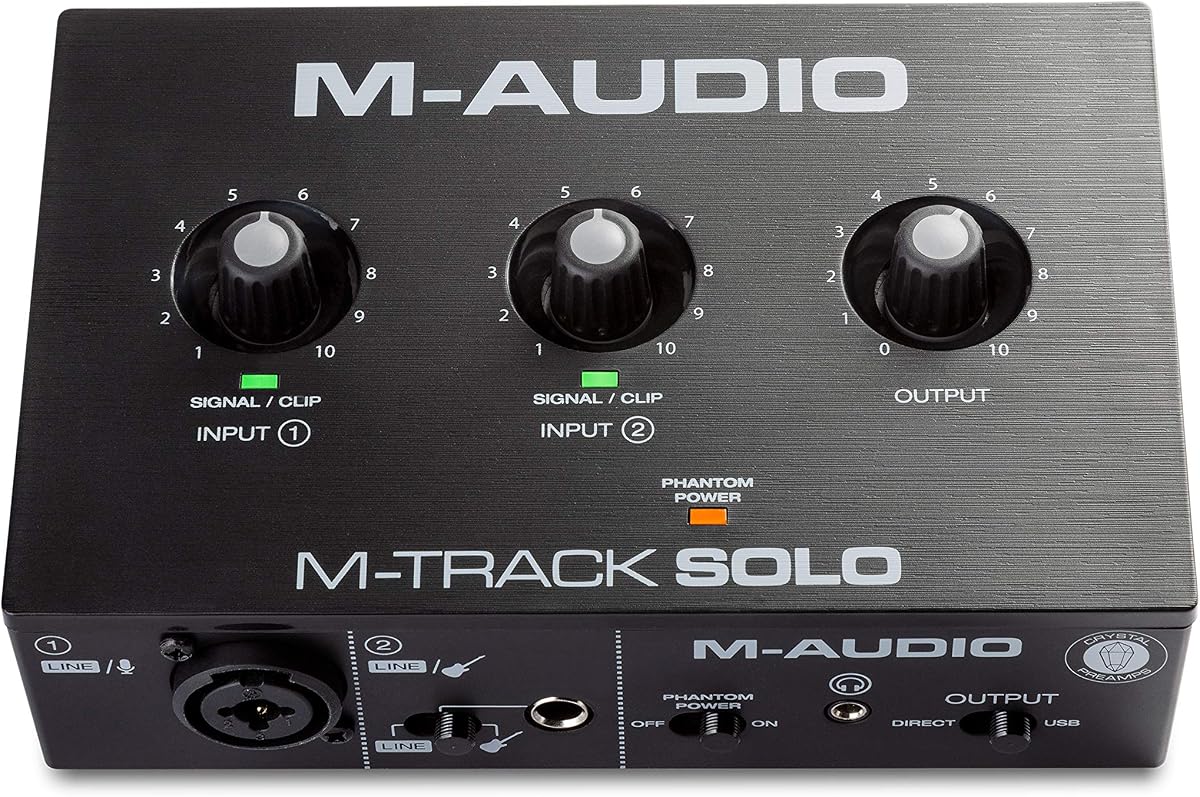
The M-AUDIO M-Track Solo is a versatile USB sound card delivering pristine 48kHz audio resolution for Mac and PC. It features one combo XLR input and one Line/Instrument input for basic recording needs. The transparent Crystal Preamp guarantees optimal sound from condenser mics and other microphones.
We may earn a commission when you buy through this link, at no additional cost to you.
This interface offers fuss-free monitoring with a USB/Direct switch for zero latency playback. It includes stereo RCA outputs for total monitoring flexibility alongside a headphone jack. The included MPC Beats software provides essential production tools from Akai Professional for music creation.
With only one instrument input you cannot record guitar and vocals simultaneously without extra gear. The RCA outputs are less convenient for professional monitoring setups. These limitations are acceptable given the device's affordability and compact footprint for small spaces.
This interface is perfect for solo artists and podcasters needing a simple and reliable recording solution. It is easy to set up and use for beginners. We suggest it for those who want to start recording without complexity.
Transparent Crystal Preamp guarantees optimal sound from all your microphones.
RCA outputs and headphone jack ensure you can monitor your recordings in various ways.
We may earn a commission when you buy through this link, at no additional cost to you.
The IK Multimedia iRig USB is a modern guitar audio interface offering studio-grade 24-bit 48kHz resolution. It includes a USB-C cable compatible with Mac, PC, and the new iPhone 15 for seamless connection. The interface supports direct monitoring for silent practice and features a dedicated Amp out for your rig.
We may earn a commission when you buy through this link, at no additional cost to you.
It bundles a complete suite of recording software and plug-ins to jumpstart your creative journey. The compact and durable design ensures it can withstand professional use on the road. You can craft your music easily with everything you need for recording at your fingertips.
This interface does not support Lightning cables limiting older device compatibility. The feature set is basic compared to larger interfaces but it covers essential needs well. These trade-offs are minimal considering the modern connectivity and portability it offers.
This interface is ideal for musicians who want a reliable and modern connection option. It works well with today's apps and allows you to create on the go. We recommend it for anyone needing a durable and simple solution.
Compatible with Mac PC and iPhone 15 ensuring you can focus on your music.
Bundled software and durable design empower you to craft your music easily.
We may earn a commission when you buy through this link, at no additional cost to you.
Choosing the right interface requires understanding key factors that affect your recording experience and sound quality.
Consider how many instruments or microphones you plan to record simultaneously. A solo guitarist may only need one instrument input while a band will require multiple. Outputs should support both headphones and studio monitors for flexible monitoring.
Match the number of inputs and outputs to your current and future recording needs.
Higher sample rates like 96kHz and bit depths like 24-bit capture more audio detail and dynamic range. This is crucial for professional sounding recordings that require high fidelity. Ensure your Mac supports the selected rate for smooth playback.
Look for interfaces that support 24-bit 96kHz or higher for optimal audio quality.
Low latency is essential for real-time monitoring without distracting delays. Interfaces with direct monitoring features allow you to hear your guitar instantly. Check driver support for Mac to ensure seamless operation without lag.
Prioritize interfaces with low-latency drivers and direct monitoring capabilities.
If you travel often a compact and lightweight interface is more practical than a desktop model. Some units are pocket-sized and bus-powered by USB-C making them easy to carry. Consider build quality and durability for regular use.
Choose a design that fits your workflow and mobility requirements.
Many interfaces include DAW software and plugins which add value to your purchase. Check if the included software matches your production style and learning level. Some bundles offer free trials or limited versions of premium tools.
Verify the software included and ensure it meets your creative needs.
USB-C is becoming the standard for modern Macs ensuring fast data transfer and power. Interfaces with Thunderbolt or ADAT support offer more future-proofing for expanding setups. Ensure your computer ports match the interface requirements.
Select an interface with connectivity that aligns with your current Mac model.
Prices vary widely from budget models to premium units. Determine a price range that balances cost with necessary features. Sometimes paying more for better preamps saves money on later upgrades.
Invest in quality features you need now rather than unnecessary extras.
High-quality preamps ensure clean gain for microphones and instruments without noise. Features like Air mode or Auto Gain can enhance sound clarity and ease of use. Transparent preamps are essential for accurate tone reproduction.
Look for interfaces with transparent high-gain preamps for best results.
Connect the interface to your Mac using a reliable USB-C or Thunderbolt cable to ensure stable power and data transfer. Install any required drivers or software from the manufacturer to enable full functionality and low latency monitoring. Configure your audio settings in macOS Sound preferences to select the interface as input and output.
Set input gain levels carefully to avoid clipping while capturing clear audio. Use the Gain Halo or LED meter to find the optimal level before recording. Monitor your signal through headphones to catch issues early during sessions.
Store your interface in a protective case when traveling to prevent physical damage. Keep ports clean and dry to avoid connectivity issues. Regularly update firmware to maintain compatibility and fix bugs.
USB-C interfaces offer faster data transfer and can deliver more power for bus operation. They are becoming standard for modern Macs and iPhones. Older USB interfaces may require adapters and have slower speeds.
Many modern interfaces are class-compliant and do not require drivers on macOS. Check the product description for driver requirements to avoid compatibility issues. Installing official drivers may provide additional features like EQ.
Many interfaces work with iPad using USB-C or Lightning adapters. Ensure the interface supports iOS for direct recording. Some models like iRig are designed specifically for iOS devices.
Direct monitoring allows you to hear your guitar with zero latency while recording. Without it you may hear delays caused by computer processing. This is crucial for playing along with backing tracks accurately.
Most include DAWs like Ableton Live Lite or Pro Tools Intro. They also come with plugins and virtual instruments. Check the exact list before purchasing to ensure you get what you need.
Yes most interfaces listed support both Mac and PC. Windows drivers may need to be installed from the manufacturer website. Some features like Universal Control work across both systems.
Use high-quality cables and ensure your interface is properly grounded. Avoid placing USB cables near power supplies. Keep gain settings balanced to prevent clipping and interference.
Phantom power supplies electricity to condenser microphones. If you use dynamic mics or instruments you may not need it. Most interfaces include a 48V switch for this feature.
This guide presented ten top interfaces ranging from budget-friendly to professional studio units. The Focusrite Scarlett Solo and M-AUDIO M-Track Duo offer great value for most musicians. Premium options like Motu M2 deliver exceptional sound quality for serious creators.
Prioritize input count and latency performance to ensure your setup meets your recording style. Features like direct monitoring and software bundles add convenience and production power. Consider how portable you need to be when selecting a model.
Check current availability and prices before purchasing as they can change often. Verify compatibility with your Mac model and operating system version. Investing in the right interface will enhance your music production experience for years.