
Aqara Motion and Light Sensor P2
3.5Editor score
Native Matter over Thread
Light sensor included
Long battery life
This guide compares the top Matter compatible motion sensors for home automation, evaluating features like detection accuracy, battery life, and smart home
Choosing the right motion sensor for your smart home can be challenging with so many protocols and features available. A Matter compatible motion sensor ensures seamless connectivity across different ecosystems like Apple Home, Alexa, and Google Home without needing multiple hubs.
We evaluated ten leading models based on detection technology, battery performance, ease of setup, and overall reliability. Our analysis focuses on how well each device integrates into a unified smart home network while maintaining privacy and responsive automation.
Each pick in this list highlights specific strengths such as presence detection, weather resistance, or long battery life. Please note that product availability and pricing can change frequently so verify current details before purchasing.
3.5Editor score

3.8Editor score

3.7Editor score
The following table provides a side by side overview of each sensor key specifications and capabilities to help you quickly identify the model that fits your specific smart home needs.




The meross Presence Sensor MS600 stands out with its advanced radar and PIR combination for reliable occupancy tracking. It holds a solid rating and delivers precise detection even when users are stationary in a room.
We may earn a commission when you buy through this link, at no additional cost to you.
Its standout quality is the ability to detect subtle presence changes without relying solely on motion. The built-in light sensor further enhances automation by adjusting lighting based on ambient brightness levels.
While it requires a continuous power source which may limit placement options the performance benefits outweigh this trade-off for many users. The need for a hub specifically for Matter adds a slight setup step but ensures robust local control.
This sensor is ideal for homeowners seeking a premium experience with wide ecosystem support. We recommend it for living rooms or hallways where consistent occupancy data is critical for smart lighting.
The combination of millimeter wave radar and PIR allows the sensor to differentiate between actual human presence and minor movements like pet activity.
Users can connect directly to HomeKit or Alexa without a hub while still gaining Matter benefits when a compatible bridge is available.
We may earn a commission when you buy through this link, at no additional cost to you.
The Aqara Motion and Light Sensor P2 offers exceptional value for those entering the Matter ecosystem. It combines motion and light detection into a compact device that runs on standard batteries for years.
We may earn a commission when you buy through this link, at no additional cost to you.
Its key strength is the independent light sensor which allows for complex automations like adjusting blinds based on brightness. The Thread protocol ensures low latency and reliable connectivity across your smart home network.
The main limitation is the dependency on a compatible Thread border router which might not be present in all homes. Additionally Alexa users cannot utilize the light sensor feature which reduces functionality slightly for some.
This is a top choice for budget-conscious buyers needing reliable automation without sacrificing performance. We suggest it for bedrooms or hallways where cost efficiency and battery life are priorities.
Powered by two CR2450 batteries this sensor can operate for up to two years reducing maintenance needs significantly.
Automations execute locally without cloud dependency ensuring faster response times and enhanced privacy for your daily routines.
We may earn a commission when you buy through this link, at no additional cost to you.
The Aqara Presence Sensor FP300 brings premium features like temperature and humidity monitoring to a Matter compatible device. It uses AI to learn your habits and reduce false triggers over time.
We may earn a commission when you buy through this link, at no additional cost to you.
Its 5-in-1 design makes it a versatile tool for home automation beyond simple motion detection. Users can create scenes that adjust climate settings based on occupancy and environmental data.
The premium price reflects its rich feature set and robust build quality. While it requires a specific hub for some connections the benefits of integrated sensing and AI learning justify the cost for many.
This sensor is perfect for tech enthusiasts wanting comprehensive environmental control. We recommend it for living areas where detailed automation enhances comfort and energy efficiency.
Adaptive AI optimizes sensitivity continuously ensuring lights stay on only when people are present reducing energy waste.
Support for both Zigbee and Matter gives users flexibility to choose the connection type that fits their existing infrastructure.
We may earn a commission when you buy through this link, at no additional cost to you.
The Eve Motion 3-Pack offers robust local control with a focus on privacy and speed. It is designed to work seamlessly with Apple Home but also supports other major platforms through Matter.
We may earn a commission when you buy through this link, at no additional cost to you.
Its key advantage is the lack of cloud dependency ensuring that automations work even if your internet connection fails. The IPX3 rating allows placement in semi-outdoor areas like covered patios.
Setup requires an Apple device which might be a barrier for Android users initially. The price per unit is higher than competitors but the privacy features and build quality offset this for many.
This pack is ideal for households heavily invested in the Apple ecosystem. We suggest buying it for multiple rooms where consistent motion data is needed throughout the home.
Communication happens locally between devices without sending data to external servers ensuring your habits remain private.
Water resistance allows for placement in damp areas like bathrooms or entryways where standard sensors might fail.
We may earn a commission when you buy through this link, at no additional cost to you.
The TP-Link Tapo Motion Sensor T100 is a reliable choice for those already using Tapo smart devices. It uses a proprietary sub-1G protocol to ensure long battery life and stable connection.
We may earn a commission when you buy through this link, at no additional cost to you.
Its ability to detect motion over wide ranges and adjust sensitivity makes it versatile for different room sizes. The Smart Action feature allows for quick automations directly through the app.
The downside is its reliance on a Tapo hub which limits integration with non-Tapo smart homes. It also lacks native Matter support which may restrict future ecosystem expansions.
This sensor is best for budget-friendly setups within the Tapo ecosystem. We recommend it for garages or offices where battery life and cost are primary concerns.
A single CR2450 battery can power the device for up to two years reducing the frequency of maintenance tasks.
Real-time alerts and local sound alarms keep you informed of activity without needing constant cloud polling.
We may earn a commission when you buy through this link, at no additional cost to you.
The meross Presence Sensor MS605 is built to withstand harsh weather with an IP67 rating making it suitable for outdoor use. It uses AI to learn space occupancy patterns for accurate detection.
We may earn a commission when you buy through this link, at no additional cost to you.
Its battery powered design allows for easy installation anywhere without wiring concerns. The zoning feature lets users set specific conditions for different areas within the detection range.
Some users might find the setup process slightly complex compared to simpler models. The need for a Matter compatible hub is standard but adds a step for first time users.
This sensor is perfect for outdoor lighting or security needs. We recommend it for driveways or patios where reliable detection in any weather is essential.
IP67 rating protects against water and dust allowing use in rain or high humidity environments without failure.
Customizable zones allow for different automation rules for different areas like bathroom or living room independently.
We may earn a commission when you buy through this link, at no additional cost to you.
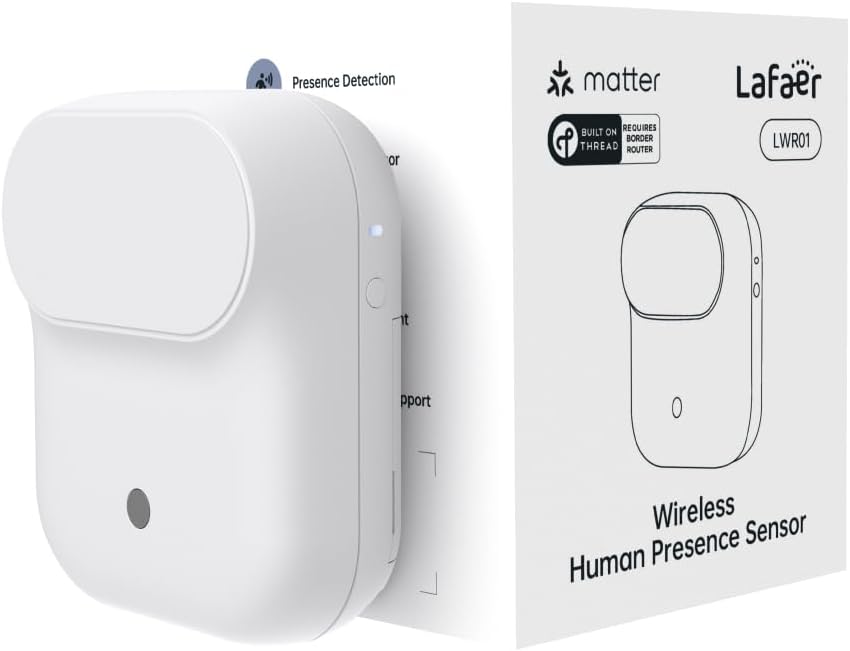
The LWR01 sensor offers a balance of detection range and versatility for multiple smart home setups. It uses mmWave radar to sense even minute movements ensuring reliable occupancy tracking.
We may earn a commission when you buy through this link, at no additional cost to you.
Users can power it via battery for mobility or use a wired connection for continuous operation. The included light sensor helps prevent lights from turning on during daylight hours.
Documentation and setup can be tricky depending on your existing hub. Compatibility varies across platforms which means checking your router or bridge support before purchase.
This is a solid choice for users needing flexible power options. We suggest it for hallways or spaces where both battery and wired options might be useful over time.
mmWave technology detects breathing or small movements allowing lights to stay on while you are sitting still.
Optional Type-C wired support means you can swap between battery convenience and continuous power easily.
We may earn a commission when you buy through this link, at no additional cost to you.
The Aqara Zigbee 3.0 Motion Sensor P1 offers a robust solution for existing Aqara smart home users. It is designed for long battery life and easy integration into home automations.
We may earn a commission when you buy through this link, at no additional cost to you.
Its configurable timeout feature helps save energy by allowing you to decide how long lights stay on after motion stops. The adjustable sensitivity ensures accurate detection across various environments.
You need an Aqara hub for this to work which may require an upfront investment. Light sensor functionality is limited on some platforms which may affect automation flexibility.
This sensor is ideal for homeowners with Aqara ecosystems. We recommend it for rooms where battery longevity and simplicity are key requirements.
With five years of battery life this sensor reduces the need for frequent replacements saving time and effort.
Adjustable timeout settings let you tailor detection behavior to different rooms and usage patterns easily.
We may earn a commission when you buy through this link, at no additional cost to you.
The SwitchBot Smart mmWave Radar Motion Sensor uses advanced radar to detect presence even when completely stationary. It includes AI features to filter out false triggers from pets or fans.
We may earn a commission when you buy through this link, at no additional cost to you.
Its magnetic base and dynamic zone positioning allow for precise placement and control. Users can set specific zones for different behaviors which adds depth to home automation.
A SwitchBot hub is necessary for full functionality which adds to the cost. Setup may require some technical understanding to get the zones right initially.
This is a great choice for smart home enthusiasts. We suggest it for living rooms where precise detection and customization are valuable features.
Dividing detection areas into zones lets you create targeted automations for specific spots in a room.
AI learning helps ignore environmental noise like air currents reducing false alerts significantly.
We may earn a commission when you buy through this link, at no additional cost to you.
The SONOFF SNZB-03P offers a cost effective entry into motion sensing with strong battery performance. It is designed for quick detection to prevent energy waste while maintaining simplicity.
We may earn a commission when you buy through this link, at no additional cost to you.
Its local scene support means automations can run even if the internet is down. This ensures reliability for basic tasks like turning on lights when you enter a room.
You must have a SONOFF Zigbee bridge which may limit integration with other smart home brands. The battery life is good but not as long as some competitors.
This sensor is perfect for budget focused buyers. We recommend it for utility rooms or closets where cost and basic performance are the main priorities.
The sensor triggers within seconds to ensure lights are available immediately upon entering a space.
Local smart scenes function independently of the cloud maintaining uptime during internet outages.
We may earn a commission when you buy through this link, at no additional cost to you.
Selecting the right sensor involves weighing detection technology power needs and ecosystem compatibility. We highlight key factors to help you make an informed choice.
Modern sensors use PIR mmWave radar or a combination. PIR detects heat changes but may miss stationary users while mmWave detects micro movements for better accuracy.
Look for hybrid models if you need presence detection for lighting that stays on while reading or sitting.
Sensors come in battery powered or corded versions. Battery units offer flexibility but require periodic replacement whereas corded units provide continuous operation without maintenance.
Choose battery for hard to reach spots and corded for high frequency areas like main hallways.
Many Matter sensors work best with a Thread border router or specific hub. Check your existing setup to see if you need to buy a bridge for connectivity.
Ensure the hub you choose supports the protocol required by your sensor to avoid compatibility issues.
IP ratings indicate how well a sensor resists dust and water. IPX3 or IP67 is recommended for bathrooms or outdoor areas.
Verify the rating matches the environment where you plan to install the device.
Confirm the sensor works with your smart home platforms such as HomeKit Alexa or Google Home. Some features may be limited on certain ecosystems.
Prioritize models that support all your preferred platforms for a unified experience.
Battery life varies from one to five years depending on usage. Look for models with energy efficient designs to minimize maintenance.
Consider battery type availability and expected lifespan before purchasing.
Local control options ensure data stays within your home network. Sensors without cloud dependency offer better privacy.
Check if the device supports offline automation for enhanced security.
Mounting options and adjustable viewing angles help customize detection zones. Features like pivoting bases allow precise aiming.
Choose sensors with flexible mounting to fit your specific room layout.
Begin by installing the required hub or Thread border router on your network before pairing the sensor. Follow manufacturer instructions to sync the device securely.
Place the sensor at an optimal height typically eye level and ensure no obstructions block the detection range. Adjust the angle to focus on high traffic areas.
Regularly check battery levels and clean the lens with a soft cloth to prevent false triggers from dust. Update firmware to maintain security and performance.
A Matter compatible motion sensor is a device that uses the Matter standard to connect across different smart home ecosystems like Apple Home and Alexa. It ensures seamless communication and automation without needing multiple proprietary hubs for basic functions.
Some sensors work directly with voice assistants like Alexa or HomeKit but full Matter functionality often requires a Thread border router or specific hub. Check the product details to confirm hub requirements for your setup.
PIR sensors detect heat changes caused by movement while mmWave sensors detect micro movements like breathing. mmWave is better for presence detection when you are stationary whereas PIR may turn lights off prematurely.
Battery life typically ranges from one to five years depending on usage frequency and sensor technology. Models with energy efficient designs or standby modes often offer longer durations without maintenance.
Yes but you must choose a model with an appropriate water resistance rating like IPX3 or IP67. Standard indoor sensors may fail in wet conditions so verify the IP rating for outdoor placement.
Most sensors have a reset button or sequence found in the user manual. Usually holding the pairing button for a few seconds resets the device to factory settings for reconnection.
Common causes include poor placement blocking obstructions or insufficient power. Check the sensor's angle and ensure it is mounted correctly for optimal detection range.
Matter sensors use encryption and local control to protect data. Choosing models with privacy features ensures your data remains within your network and reduces exposure to external threats.
The meross Presence Sensor MS600 leads as our top pick for its advanced radar detection and multi ecosystem support. It balances performance with reliability for most smart home needs.
Consider your power requirements and hub availability when making your decision. Sensors with local control and long battery life offer the best convenience for everyday use.
Prices and availability change often so verify current details before purchasing. We hope this guide helps you find the perfect sensor to automate your home efficiently.