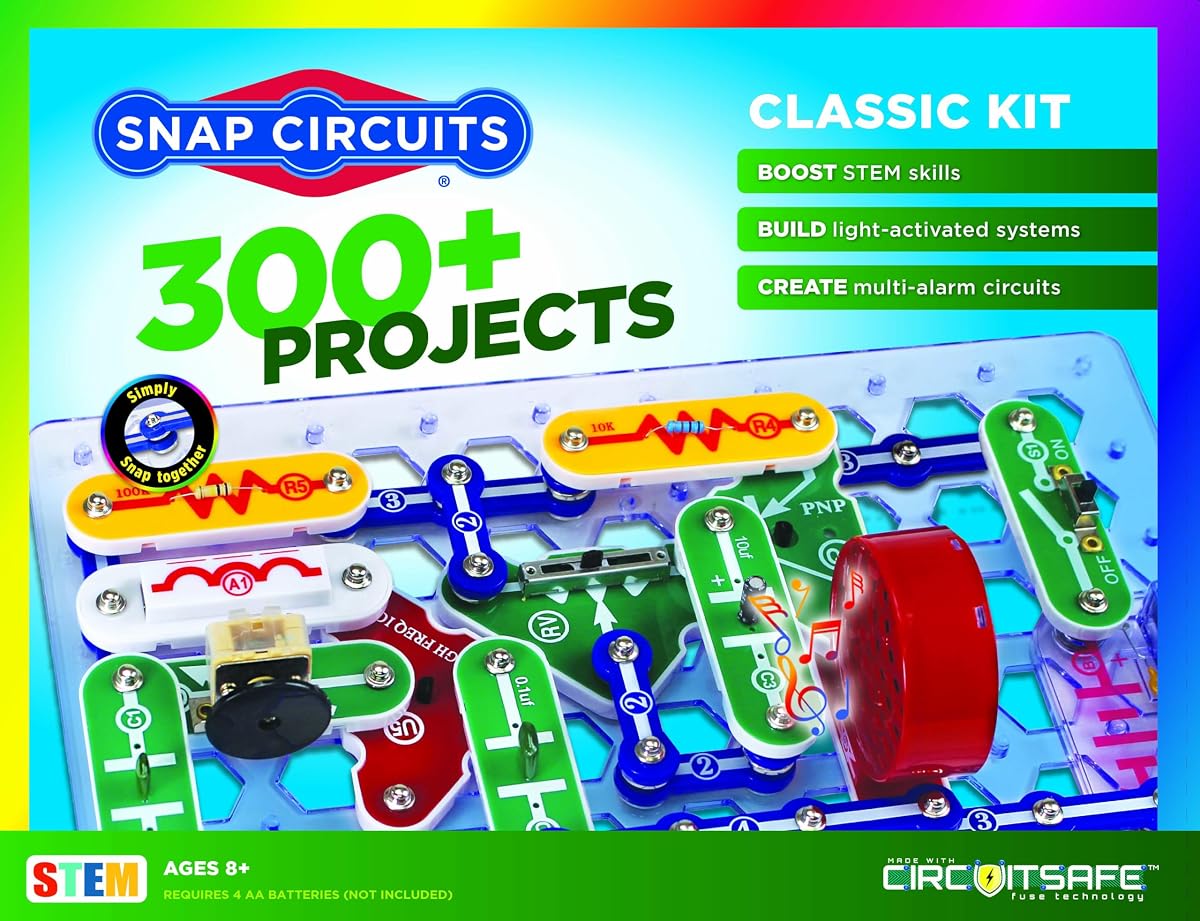
SNAP CIRCUITS Classic SC-300 STEM Electronics Kit
4.8Editor score
300+ exciting projects included
No soldering or tools needed
Color-coded snap pieces assembly
This guide compares the top electronics kits for teens to help you find the perfect STEM learning tool for coding robotics and hands-on engineering projects
Electronics kits for teens provide an engaging way to explore technology and engineering through hands-on projects that build practical skills while fostering creativity and problem-solving abilities effectively.
We evaluated each kit based on component variety, ease of use, educational value, and project complexity to ensure our recommendations support diverse learning styles and technical interests accurately.
Each pick highlights key features and ideal use cases so you can choose the right tool for your teen's skill level while noting that availability and details may change over time.
4.8Editor score

4.7Editor score

4.5Editor score
This side-by-side comparison helps you quickly evaluate the top electronics kits for teens based on key specifications and features to find the best match for your learning goals.


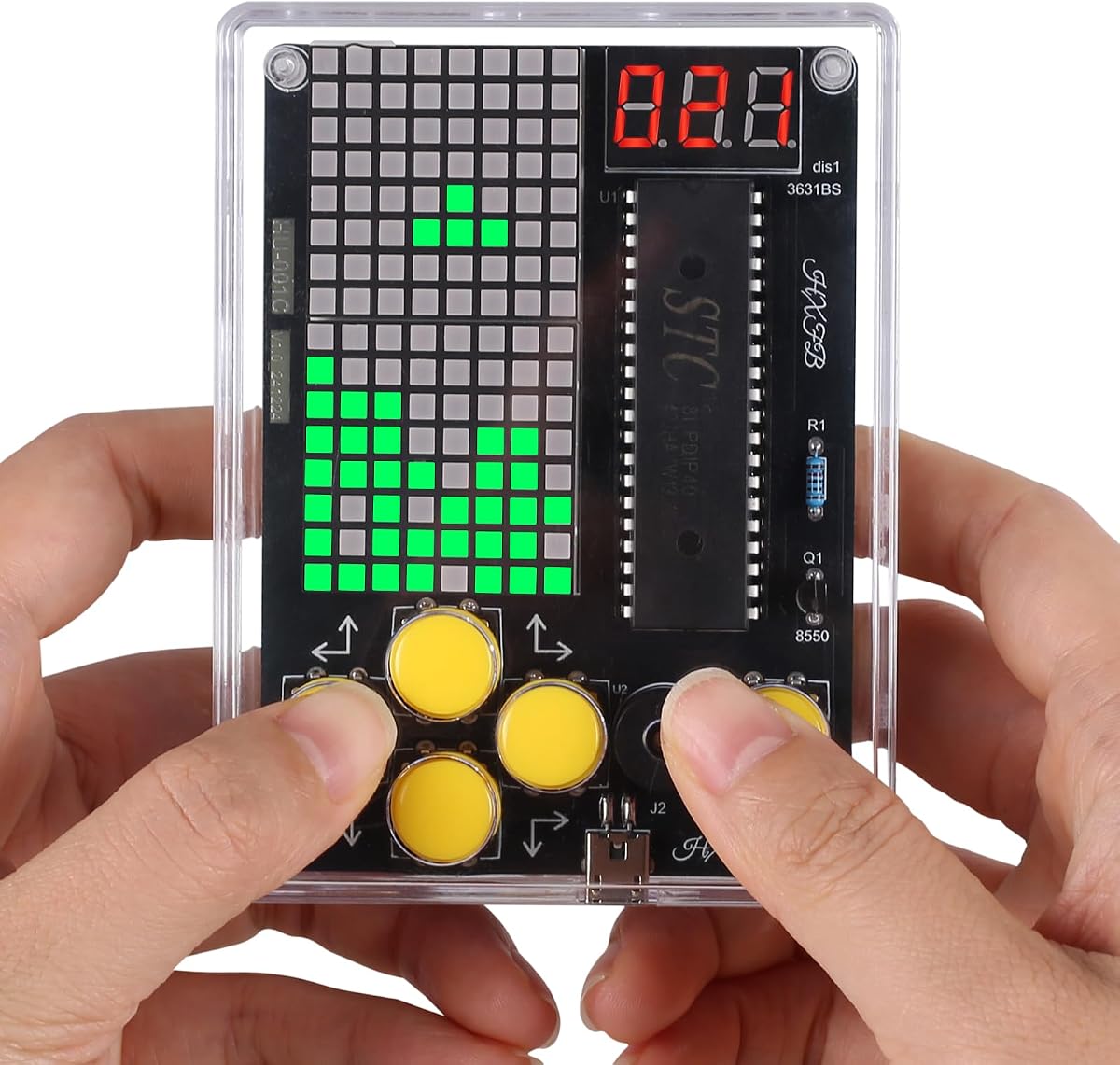
This kit stands out as the premier choice for teens ready to dive deep into electronics and coding with a massive collection of components and structured learning paths.
We may earn a commission when you buy through this link, at no additional cost to you.
It includes over two hundred parts like RFID modules and motors enabling complex builds that combine sensors displays and control logic into interactive real-world systems easily.
While it offers more than most kits may require the organized layout and pre-soldered modules ensure that the extra complexity does not overwhelm beginners starting their journey.
Teens interested in serious STEM projects will find this kit provides the tools and guidance needed to progress from simple LEDs to sophisticated automated systems quickly.
The sheer number of I/O pins and memory allows teens to build larger more complex projects without needing to upgrade hardware as their skills grow over time.
Guided lessons help learners understand core concepts before modifying code turning structured exercises into original inventions that reinforce engineering and programming fundamentals effectively.
We may earn a commission when you buy through this link, at no additional cost to you.
This kit offers an excellent balance of cost and features making it the ideal starting point for teens who want comprehensive electronics education without breaking the bank.
We may earn a commission when you buy through this link, at no additional cost to you.
It includes everything needed to build thirty projects including RFID and sensors which helps learners gain confidence in wiring and coding before moving to more advanced hardware.
The absence of soldering requirements reduces setup time and risk allowing teens to focus on learning logic and circuit design rather than technical assembly challenges initially.
Budget-conscious families looking for a reliable introduction to maker projects will find this kit provides lasting value through its organized parts and repeatable learning structure.
By focusing on essential components and clear tutorials this kit ensures teens get high educational value without paying for unnecessary extras or overly complex modules.
Pre-soldered modules and breadboard power simplify the initial experience helping new users move quickly from unboxing to running their first successful electronic projects.
We may earn a commission when you buy through this link, at no additional cost to you.
This kit transforms coding and electronics into a dynamic robotics experience allowing teens to build drive and program a smart car that reacts to its environment in real time.
We may earn a commission when you buy through this link, at no additional cost to you.
Features like FPV streaming and obstacle avoidance introduce advanced concepts in sensor integration and wireless communication while keeping the project engaging and physically interactive.
Although assembly requires careful attention to wiring the keyed connectors and illustrated guide help minimize errors ensuring a smooth build process even for first-time robotics enthusiasts.
Teens fascinated by autonomous systems and mobile robotics will find this kit offers a challenging yet rewarding project that bridges software development with mechanical engineering beautifully.
The onboard camera allows teens to see what the robot sees enabling intuitive control and deeper understanding of how sensors and cameras guide automated movement.
A built-in lithium-ion battery ensures long play sessions without constant battery swaps making the experience more seamless and reducing ongoing maintenance costs.
We may earn a commission when you buy through this link, at no additional cost to you.
This kit excels at teaching fundamental electrical engineering concepts through a safe and intuitive snap-together system that eliminates the need for soldering or specialized tools entirely.
We may earn a commission when you buy through this link, at no additional cost to you.
Teens can build over three hundred different projects ranging from simple alarms to complex circuits which reinforces core ideas about current voltage and circuit paths effectively.
The color-coded pieces and numbered instructions ensure that learners of any age can follow along without frustration while exploring the basics of how electronics power daily devices.
Families prioritizing safety and ease of use will appreciate how this kit encourages experimentation and learning without the risks or technical barriers associated with traditional electronics soldering.
The snap-based design removes the hazards of soldering allowing teens to focus purely on circuit logic and component function without safety concerns or technical overhead.
With three hundred project options the kit provides long-term engagement ensuring that teens can continue learning and discovering new concepts well into their teenage years.
We may earn a commission when you buy through this link, at no additional cost to you.
This kit offers a practical application for electronics learning by enabling teens to build a working Bluetooth speaker they can use in their room or dorm space daily.
We may earn a commission when you buy through this link, at no additional cost to you.
It focuses on soldering practice and amplifier circuits providing a realistic engineering challenge that teaches component placement and wiring skills essential for advanced electronics work.
While some versions of the module may require checking manual details the included instructions guide users through each step ensuring a successful build with clear visual references.
Teens who want a project that results in a usable gadget rather than just a prototype will find this kit a rewarding bridge between theoretical learning and real-world utility.
The finished speaker serves a daily function reinforcing the value of engineering skills and providing a tangible reward for the effort invested in assembly and testing.
By focusing on soldering the amplifier board the kit offers targeted practice that helps teens develop precision and confidence in handling small electronic components safely.
We may earn a commission when you buy through this link, at no additional cost to you.
This kit is designed specifically to introduce teens to Arduino programming and basic electronics through a series of guided lessons that build skills progressively over time.
We may earn a commission when you buy through this link, at no additional cost to you.
It includes essential components like an LCD display and various sensors allowing teens to see immediate results from their code and understand how digital inputs and outputs work.
The PDF tutorial and organized parts list make it easy for first-time builders to find components and follow instructions without needing external resources or prior experience.
For teens just starting their electronics journey this kit provides a low-pressure supportive environment to learn logic coding and circuitry before tackling more complex projects.
The guided lessons start simple and increase in complexity helping teens build confidence step by step without feeling overwhelmed by too many variables at once.
The included PDF tutorial ensures that learners can reference instructions and code anytime making the setup and learning process smooth and frustration-free.
We may earn a commission when you buy through this link, at no additional cost to you.
This kit combines audio engineering with visual appeal allowing teens to build a speaker that not only plays music but also pulses lights to the rhythm creating a dynamic effect.
We may earn a commission when you buy through this link, at no additional cost to you.
The high-resolution manual ensures every soldering step is visually clear reducing the risk of errors and helping teens understand how components fit into the final enclosure.
Soldering skills are practiced on a pre-simplified board allowing learners to focus on assembly and wiring without getting bogged down by complex circuitry or difficult joints.
Teens who appreciate aesthetics and function equally will enjoy building this kit as it results in a stylish and useful desk accessory that demonstrates practical electronics skills.
The LED light visualizer adds an engaging layer of interactivity making the project feel more like a complete system rather than just a basic audio component.
Every step is illustrated with clear photos ensuring that even beginners can follow the process accurately and build a reliable and well-assembled final product.
We may earn a commission when you buy through this link, at no additional cost to you.
This kit offers a unique opportunity for teens to explore the intersection of physics and electronics by building a musical instrument controlled by electric fields and hand movement.
We may earn a commission when you buy through this link, at no additional cost to you.
The assembly relies on breadboard connections instead of soldering making it accessible for those who want to experiment with circuit theory without technical barriers or permanent changes.
A colorful 22-page booklet explains how capacitance and electrical fields work ensuring that learners understand the science behind the sound rather than just following assembly steps.
Teens interested in music technology or physics will find this kit a fascinating project that introduces unconventional electronics concepts in a fun and interactive way.
The kit teaches real principles of electrical capacitance helping teens understand how invisible fields can control sound and device behavior in practical applications.
Using a breadboard simplifies the build process allowing teens to focus on the science and sound rather than the mechanics of soldering or permanent assembly.
We may earn a commission when you buy through this link, at no additional cost to you.
This kit serves as an essential expansion for teens who already have a controller board providing a massive collection of sensors to create advanced and interactive projects.
We may earn a commission when you buy through this link, at no additional cost to you.
It includes modules for motion sound and environmental monitoring allowing learners to explore different types of input and output without buying components individually one by one.
The included tutorial materials and datasheets help users understand pin requirements and wiring ensuring that each module functions correctly in complex multi-sensor setups.
Teens looking to customize and scale their projects will find this kit invaluable for adding new capabilities like temperature sensing or motion detection to existing builds easily.
The variety of sensors allows teens to tailor projects to specific interests enabling customization that goes beyond standard starter kit limitations and capabilities.
Access to datasheets and tutorial materials helps learners understand how each module works and how to integrate it into larger systems effectively.
We may earn a commission when you buy through this link, at no additional cost to you.
This kit offers a gamified approach to electronics learning allowing teens to build a device with multiple interactive functions that reward progress and engagement during assembly.
We may earn a commission when you buy through this link, at no additional cost to you.
With three difficulty levels it accommodates different skill levels ensuring that beginners can learn soldering basics while more experienced teens can tackle advanced steps comfortably.
Video guidance and a step-by-step manual support learners through the build process providing clear instructions that help avoid common mistakes during component placement.
Teens who enjoy games and challenges will appreciate how this kit turns technical learning into an engaging activity that results in a fun interactive electronic device.
The interactive functions create a sense of play that keeps teens motivated throughout the build making technical skills feel like part of a fun game.
Different difficulty levels allow the kit to grow with the learner ensuring that it remains useful as skills improve over time without outgrowing the challenge.
We may earn a commission when you buy through this link, at no additional cost to you.
Selecting the right electronics kit depends on matching project complexity and component types to your teen's current skills and future learning goals effectively.
Choose a kit that aligns with your teen's experience so they are challenged enough to learn without becoming discouraged by tasks that are too difficult or advanced.
Look for beginner-friendly options with solderless options if new to electronics or advanced soldering kits if they already have basic technical skills to build upon.
A good kit should include a wide range of sensors and modules to allow for diverse projects that keep interest high over time rather than repeating the same tasks.
Check for essential parts like motors displays and input sensors that enable building complex systems and understanding how electronics interact in real-world applications.
Clear step-by-step instructions with diagrams are critical for avoiding frustration and ensuring teens can focus on learning concepts rather than getting stuck on assembly details.
Look for kits that provide digital tutorials and manuals that offer both visual and textual guidance to support different learning styles effectively.
The number and variety of projects included can determine long-term value so choose a kit that offers enough challenges to last weeks or months of exploration.
Projects should range from simple tasks to complex builds so teens can progress steadily and apply what they learn in new creative ways regularly.
Kits that support programming languages like Python or Arduino C offer deeper learning opportunities and prepare teens for future careers in software development.
Ensure the kit provides example code and guides to help teens understand how code controls hardware and how to modify it for custom behaviors.
Safety is paramount especially if teens are new to electronics so choose kits that do not require soldering or provide safety tools and guidance for handling components.
Avoid kits with exposed high-voltage parts and ensure any power supplies are battery-operated or low voltage to prevent accidents during experimentation.
While cost is a factor consider the long-term value a kit offers in terms of learning outcomes and the number of projects included rather than just the initial price.
Invest in kits that allow for expansion so teens can add more components later instead of buying entirely new sets as their skills improve.
Choose reputable brands that offer community support and resources so teens can find help online or through forums if they encounter issues during building.
Check for online tutorials and communities related to the kit to ensure that help and ideas are readily available throughout the learning process.
Start by reading the manual thoroughly to understand component functions and safety rules before beginning any assembly to ensure proper handling of electronic parts.
Organize components in the provided storage containers to prevent losing small parts and to speed up the setup process for subsequent projects.
Store the kit in a cool dry place away from direct sunlight and moisture to protect electronic components from damage over time and maintain functionality.
Most electronics kits are designed for ages eight and up but more complex kits are ideal for teens twelve to eighteen who have some familiarity with basic electronics and want to explore deeper concepts.
Not necessarily. Many kits are designed specifically for beginners with step-by-step instructions and guided projects that teach foundational skills from scratch without needing prior knowledge.
No. Many kits include pre-soldered components or breadboard setups that allow teens to build and learn without soldering although some advanced kits may include soldering practice.
Yes. These kits are widely used in STEM classrooms and coding clubs because they provide structured learning experiences and hands-on projects that engage students effectively.
Most kits use USB power or batteries to operate safely without needing direct wall power which reduces risk and makes them portable for use in different environments.
Project times vary widely from a few hours for simple builds to several days for complex robotics kits depending on the teen's experience and attention to detail.
Many kits support expansion through additional sensors or modules allowing teens to add new features and complexity as they grow more comfortable with electronics and coding.
Always follow the instructions provided and supervise younger teens during assembly to ensure safe handling of small parts and prevent accidental short circuits or burns.
The top picks offer diverse options from beginner-friendly snap kits to advanced robotics projects ensuring there is a suitable choice for every teen's interests and skill level.
Prioritize kits that match your teen's current knowledge while providing room to grow through progressive learning paths and expanding component options over time.
Remember to check availability and current specifications before purchasing as details may change and selecting the right kit can make a lasting impact on learning.