
Luster Leaf 1625 Digital Soil Thermometer
4.2Editor score
Simple one-function thermometer
Early season planting guide
Durable probe design
This guide compares the top ten digital soil thermometers available today, reviewing features like temperature accuracy, waterproofing, and multi-parameter
Keeping track of soil temperature is essential for successful gardening and composting. Digital soil thermometers provide accurate readings quickly, helping you decide when to plant seeds or manage your compost pile effectively.
We evaluated ten top-rated models based on accuracy, durability, and ease of use. Our comparison covers basic analog styles and advanced digital kits that measure multiple soil conditions simultaneously.
Each pick highlights specific strengths for different gardening needs. Prices may fluctuate, so check current listings for the best deals before making your final purchase decision.
4.2Editor score

4.2Editor score

4.2Editor score
The following table provides a side-by-side comparison of all ten selected products. Review the key specifications to find the model that best fits your specific gardening or composting requirements.




The YAMRON 4-in-1 Soil Moisture Meter offers a comprehensive tool for modern gardeners who need quick and reliable data. With a rating of 4.2 stars, it stands out for its ability to measure soil moisture, pH, temperature, and sunlight intensity simultaneously. This multifunctional approach eliminates the need for multiple tools, streamlining your routine checks.
We may earn a commission when you buy through this link, at no additional cost to you.
Its standout quality lies in the latest probe detection technology released in 2026. This ensures fast and accurate readings within just ten seconds of insertion. The large LCD screen with white backlight allows you to read parameters clearly even in low light conditions, which is essential for evening garden inspections.
One honest trade-off is the requirement to moisten dry soil before testing to avoid damaging the device. You must wait ten minutes after watering the test area for accurate results. While this adds a small step, it protects the probe and ensures the data you receive is reliable for plant care decisions.
This model is ideal for homeowners managing both indoor and outdoor plants. If you want a single device to monitor soil acidity and light levels while checking moisture, this is a practical choice. The rotating head design further enhances usability by allowing you to view the screen without bending over.
This device captures four key environmental factors, giving you a complete picture of plant health without needing separate meters.
The visual content design and rotating screen make it simple for novice growers to interpret complex data accurately.
We may earn a commission when you buy through this link, at no additional cost to you.
The Luster Leaf 1625 Digital Soil Thermometer is a classic choice for gardeners who only need to track soil temperature. With a solid 4.2 rating, it is widely trusted for determining when to plant seeds in early season or when to transplant seedlings safely. It cuts out unnecessary features to provide exactly what you need.
We may earn a commission when you buy through this link, at no additional cost to you.
Its key strength is its simplicity and reliability. Unlike complex digital kits, this thermometer focuses entirely on temperature accuracy, making it easy to read and use. The stainless steel construction ensures it lasts through multiple seasons of gardening, offering a cost-effective solution for basic monitoring tasks.
The trade-off is that it does not measure moisture or pH levels. If your garden requires detailed soil analysis, you will need to purchase additional tools. However, for checking frost risks or warming soil for planting, it delivers precise data without the confusion of multiple settings.
This product is best suited for beginners or those on a tight budget. If you already have a separate moisture meter and just need a reliable thermometer, this is an efficient addition to your tool shed. It remains a must-have tool for timing your planting schedule correctly.
This tool helps ensure seeds are sown when soil temperatures are optimal for germination, reducing crop failure rates.
By focusing on a single function, it delivers high value for gardeners who prioritize temperature tracking above all else.
We may earn a commission when you buy through this link, at no additional cost to you.
The 7-in-1 Digital Soil Tester Kit expands beyond basic metrics to include fertility and TDS functions. With a higher rating of 4.4 stars, it appeals to gardeners who want detailed insights into nutrient levels and water quality. This helps you understand not just if the soil is wet, but if it is healthy enough for growth.
We may earn a commission when you buy through this link, at no additional cost to you.
Its key strength is the advanced probe technology from 2025 which ensures fast and accurate results. The large LCD display with white backlight makes reading clear in any lighting condition. You can measure soil moisture, pH, temperature, and light intensity along with EC and TDS to get a complete picture of soil conditions.
The main trade-off is the need for moist soil before testing to prevent device damage. You should wait ten minutes after moistening the area. While this requires patience, the detailed data you receive is worth the effort for precise nutrient management and scientific plant care.
This model is perfect for serious gardeners managing indoor and outdoor gardens. If you want to optimize fertilizer use and monitor water quality for your plants, this tool provides the necessary data. The extra-large screen makes it accessible for users who prefer clear and easy-to-read information.
The TDS and EC functions allow you to monitor mineral content and conductivity in your soil for better plant health.
Seven features in one device save space and time while delivering a holistic view of your growing environment.
We may earn a commission when you buy through this link, at no additional cost to you.
The Reotemp K83B1 is specifically designed for monitoring compost piles and soil temperature. With an excellent 4.7 rating, it is a favorite among those managing composting systems. The included digital guide offers expert instructions on how to get started and manage piles efficiently for maximum production.
We may earn a commission when you buy through this link, at no additional cost to you.
Its standout quality is the high-quality construction using corrosion-resistant 304 stainless steel. The 12-inch stem is perfect for reaching deep into compost bins or soil layers. It is waterproof and dust-proof, making it durable enough to withstand the tough conditions found in a garden or shed.
The trade-off is that it focuses primarily on composting rather than general plant soil. While you can use it for soil temperature, the guide is optimized for compost. If you are a home composter, this specific focus adds significant value to your setup.
This tool is ideal for beginner composters or those looking to improve their pile management. The guide simplifies the learning curve, and the durable design ensures it lasts. It helps you monitor heat levels to ensure your compost is breaking down correctly without guesswork.
The included guide provides step-by-step advice on managing your compost pile for efficient heat generation.
Waterproof and dust-proof construction ensures the device survives exposure to moisture and debris in garden environments.
We may earn a commission when you buy through this link, at no additional cost to you.
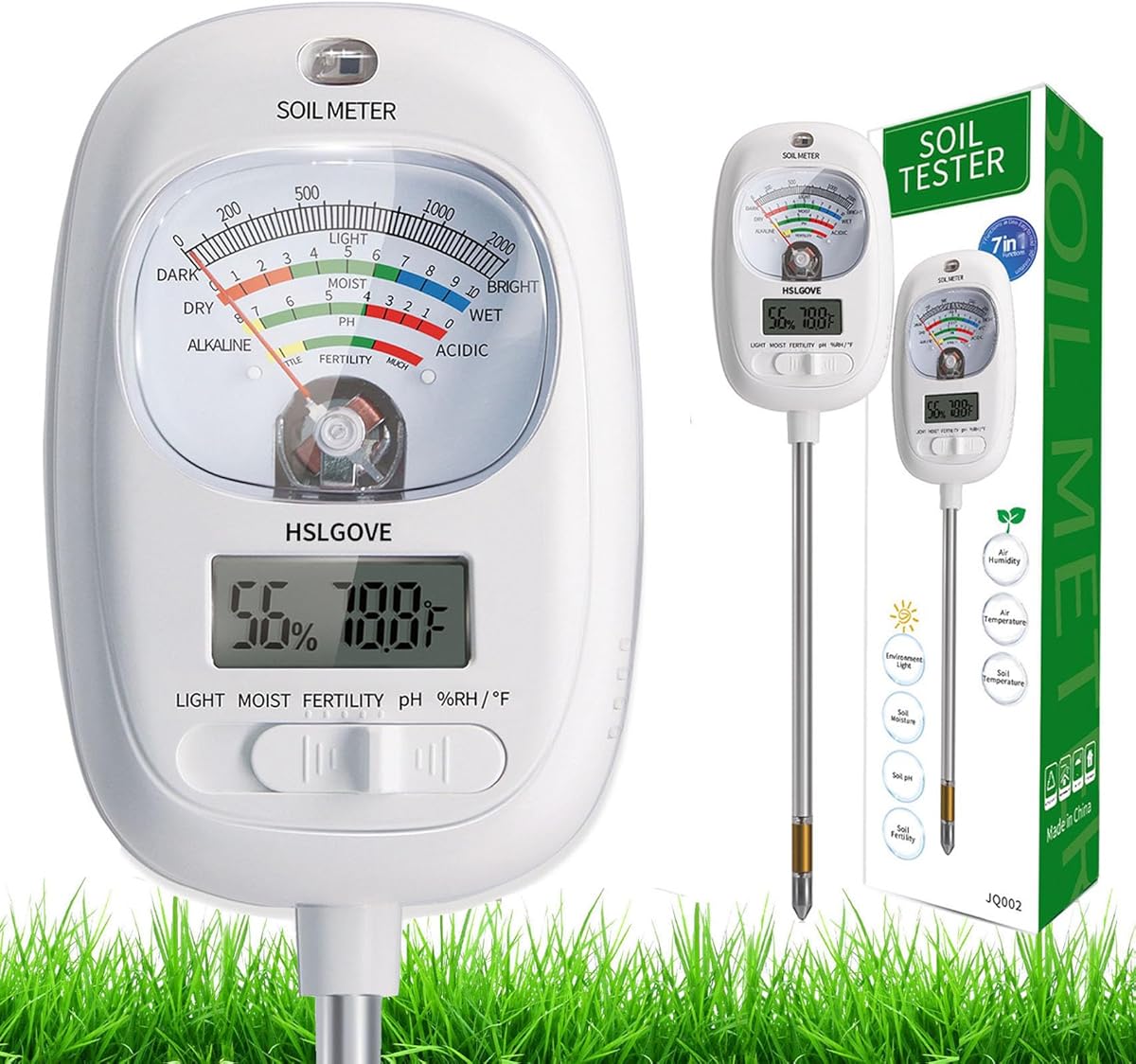
The HSLGOVE Soil Test Kit features a unique dual-screen design combining a dial meter with a digital LCD display. Rated at 4.4 stars, it allows you to monitor soil moisture and pH alongside air temperature and humidity. This patented utility design offers a comprehensive view of your environment in one unit.
We may earn a commission when you buy through this link, at no additional cost to you.
Its key strength is the 1-button switch that lets you toggle between soil and air readings. The 3-metal probe system ensures accurate analysis of soil conditions without harming plant roots. The LCD screen clearly displays soil and air temperature, helping you understand the full picture of your garden's climate.
The trade-off is that it requires battery replacement every time you change settings. Also, readings can take up to five minutes for the LCD results to settle. While this requires patience, the comprehensive data and unique design provide valuable insights for seedlings and house plants.
This model is great for users who want to monitor both soil and air conditions. If you are cultivating seedlings scientifically, tracking humidity and temperature is crucial. The dual display makes it easier to compare conditions without needing two separate tools in your garden kit.
The unique combination of dial and LCD screens gives you immediate analog and detailed digital data in one device.
The single probe design minimizes root disturbance while providing accurate soil data for healthy plant growth.
We may earn a commission when you buy through this link, at no additional cost to you.
The Urban Worm Soil Thermometer is tailored for vermicomposters who need to track specific temperature ranges for worms. With a 4.6 rating, it features easy-to-read green, yellow, and red tick marks. These visual cues let you know if conditions are within the happy zone of 55F to 90F for worms.
We may earn a commission when you buy through this link, at no additional cost to you.
Its key strength is the simplicity of the visual read. The 5-inch stainless steel stem penetrates soil and worm compost to the perfect depth. You do not need to interpret numbers, just look at the color of the mark to see if the bin is too hot or cold.
The trade-off is that it lacks backlighting and only shows temperature. If you need to check pH or moisture, this will not work for those needs. However, for monitoring worm health and bin conditions, its targeted design is highly effective and easy to use.
This product is ideal for anyone managing a worm bin. It helps you know when to cool worms off or move them to a warmer place. The stainless steel build ensures it withstands the moist conditions of a compost bin. It is a specialized tool that excels at its specific task.
Color-coded marks eliminate guesswork by showing at a glance if the temperature is safe for worms.
This tool focuses on the needs of vermicomposters, providing a direct way to monitor bin health.
We may earn a commission when you buy through this link, at no additional cost to you.
The ECOWITT WN34BS is a sophisticated sensor that connects to a gateway for remote monitoring. Rated at 4.2 stars, it offers live data viewing via the WS View Plus or Ecowitt App. This allows you to track soil temperature without walking to the garden or opening a greenhouse door.
We may earn a commission when you buy through this link, at no additional cost to you.
Its key strength is the ability to send data to a weather server for history and graphs. The IP65 waterproof rating ensures it survives outdoor use. It supports up to eight channels so you can monitor multiple locations. The long wireless range of 300 feet helps with large properties.
The trade-off is that the Wi-Fi gateway is sold separately. This increases the cost compared to standalone meters. However, the convenience of checking temperatures from your phone or laptop makes it worth the investment for tech-savvy gardeners and large farms.
This model is best for those who want to automate their garden monitoring. If you have a large garden or farm, the ability to track up to eight spots remotely saves time. The email alerts ensure you are notified of temperature changes even when you are away.
Connects to smart networks to provide real-time updates and alerts directly to your mobile devices.
Support for eight channels allows you to create a network of sensors for detailed area mapping.
We may earn a commission when you buy through this link, at no additional cost to you.
The Digital Soil EC Meter focuses on electrical conductivity to measure salt content in soil. With a 4.1 rating, it helps you take better care of plants by ensuring they are not affected by excess salts. The corded sensor probe is waterproof and includes backlighting for clear reading in dark spots.
We may earn a commission when you buy through this link, at no additional cost to you.
Its key strength is the automatic calibration function. You simply press a button to enter the state after immersing the electrode. The ATC function ensures accurate detection across a 0 to 50 degree Celsius range. This level of precision is vital for professional gardeners managing nutrient levels.
The trade-off is that it requires a specific calibration solution which is not included. If you forget this step, readings may be off. Also, it focuses on salt content rather than general pH or moisture. It is a specialized tool for those managing fertilization and soil conductivity.
This model is ideal for professional users needing precise nutrient data. If you grow plants that are sensitive to salt buildup, this tool helps prevent root damage. The waterproof probe ensures it can be used in wet conditions while providing reliable data for soil health.
Monitoring electrical conductivity helps prevent salt buildup that can harm plant roots and hinder growth.
The easy calibration feature ensures your device stays accurate over time without complex manual adjustments.
We may earn a commission when you buy through this link, at no additional cost to you.
The 4-in-1 EDGEVEIL Soil Moisture Meter offers a wireless system for monitoring plant conditions. With a high 4.5 rating, it allows you to check conditions from across your home. It uses TDR technology to measure from multiple contact points, providing stable and consistent readings.
We may earn a commission when you buy through this link, at no additional cost to you.
Its key strength is the wireless range of up to 328 feet. You can place sensors in different spots and monitor them from a central display. The single display can connect to up to twelve sensors, making it scalable for large gardens or many houseplants without needing to walk to each one.
The trade-off is that setup requires pairing sensors correctly. You must insert the probe once to monitor continuously which is good but requires initial effort. While this is more complex than a simple tool, the convenience of monitoring without disturbing roots is valuable.
This model is perfect for managing large indoor or outdoor collections. If you want to reduce bending and walking, this system saves time. The large screen shows moisture, temperature, and light clearly. It helps ensure every plant gets the right care without constant physical checks.
The ability to pair up to twelve sensors lets you manage large gardens from a single central unit.
By leaving probes in the soil, you avoid damaging delicate roots during repeated testing procedures.
We may earn a commission when you buy through this link, at no additional cost to you.
The 7 in 1 Soil Meter features a unique split display design that allows you to read pH and moisture without bending down. Rated at 3.9 stars, it uses a 5-probe system for enhanced data precision. This heavy-duty build is designed to withstand long-term outdoor exposure without losing sensitivity.
We may earn a commission when you buy through this link, at no additional cost to you.
Its key strength is the split HD display which shows real-time PH and moisture data clearly. It measures all critical parameters including air temp and humidity in one go. The probes are built to be heavy duty and corrosion resistant, making them suitable for tough or compacted soil.
The trade-off is a lower rating compared to other models in this list. It may require slightly more time for pH to settle. However, the durable build and convenient display make it a strong choice for field use or seniors who need to avoid crouching.
This model is ideal for users who want a comprehensive kit with a user-friendly design. If you need to test hydroponic substrates or large areas, the expandable system supports it. The large digits and intuitive interface help you manage your garden efficiently.
The split design keeps key data visible without requiring you to crouch over the meter on the ground.
Robust construction ensures the probes can penetrate tough soil and withstand years of outdoor use.
We may earn a commission when you buy through this link, at no additional cost to you.
Selecting the right thermometer depends on your specific gardening needs. This section outlines key factors to consider for a smart purchase.
Decide if you need basic temperature readings or if you want pH and moisture too. Multi-function meters save space but may be more complex.
Choose a device that covers the specific range required for your plants or compost.
Look for digital displays with backlighting if you inspect soil in low light. Larger screens help users with vision impairments read data.
A clear display ensures you can interpret results accurately without squinting or straining.
Stainless steel probes are best for longevity and resistance to corrosion. Check if the probe is waterproof for use in wet soil.
Invest in a sturdy probe to prevent damage when working in compacted or hard soil.
If you have a large garden, consider models with wireless data transmission. This allows you to monitor soil from a distance.
Wireless options add convenience and help track changes over time without constant field visits.
Some professional meters require calibration for accuracy. Ensure you are willing to perform maintenance steps like adjusting settings.
Proper calibration keeps your readings reliable for critical plant health decisions.
Check how long batteries last and how many are required. Models that use standard cells are easier to maintain than proprietary ones.
Good battery efficiency ensures your tool is ready whenever you need to check your garden.
Simple buttons and clear menus make testing easier. Complex interfaces can be frustrating for occasional gardeners.
Choose an interface that lets you get data quickly without navigating many menus.
Basic thermometers cost less while advanced kits cost more. Determine how many features you actually need before buying.
Balance your budget with the features that matter most to your gardening routine.
Insert the probe deep enough into the soil to get a representative reading. Ensure it is not touching rocks or roots which may affect accuracy.
Wait for the reading to stabilize before recording data. This ensures the sensor has adjusted to the soil temperature correctly.
Clean the probe after use with water and a soft cloth. Dry it completely before storing it to prevent corrosion and maintain accuracy.
Generally you should insert the probe about four to six inches deep. This ensures you measure the root zone temperature accurately.
Yes if the soil is very dry you should water it and wait ten minutes. Dry soil can damage the probe and give inaccurate readings.
Yes most models are suitable for potted plants. Ensure the pot is large enough to allow the probe to insert fully.
Many models are rated waterproof but check the specs. Always dry the device after exposure to water to protect electronics.
Check temperature at least once a week for garden soil. If growing seedlings check daily during critical early stages.
Some models measure air temp but most measure soil. Check the product description if air temperature is a requirement.
Some wireless probes are designed to stay in soil. Others should be removed to prevent prolonged exposure damage.
Professional EC meters allow calibration. Most basic thermometers do not require manual calibration.
The top three picks offer excellent options for different needs. The YAMRON 4-in-1 provides great value for home gardeners.
Prioritize durability and display quality when selecting a model. A clear screen and robust probe ensure long-term reliability.
Prices may change so check the current listings before buying. This guide helps you make an informed choice for your garden.