
Behringer X AIR XR18
4.6Editor score
18 input channels
Tablet control
Built-in WiFi
This guide compares the top digital mixing consoles for live sound and studio use, analyzing features, inputs, outputs, and connectivity to help you choose the
Digital mixing consoles have revolutionized audio production by offering unprecedented control over sound in both live and studio environments. These devices integrate complex routing, effects, and processing into a single unit, allowing engineers to manage countless inputs with precision. Choosing the right console depends on your specific workflow requirements and technical expertise levels.
We evaluated ten leading models based on their input counts, preamp quality, interface usability, and connectivity options. Our analysis focuses on real-world application scenarios ranging from small venue tours to large broadcast studios. Each product was assessed for its build quality, software ecosystem, and overall value proposition within the current market landscape.
Each pick below highlights a specific strength such as budget friendliness, premium audio quality, or compact versatility. You will find detailed breakdowns of key specifications and practical use cases for every model listed. Please note that prices and availability fluctuate frequently so verify current details before making your final purchasing decision.
4.6Editor score

4.7Editor score

4.2Editor score
The following table provides a side-by-side comparison of all ten selected digital mixing consoles. It highlights critical specifications such as input channel counts, bus configurations, and unique features to help you quickly identify the model that best fits your technical requirements and operational scale.




The Behringer X32 stands out as a premier digital mixing console offering exceptional value for professional audio applications. With a rating of 4.7 stars it consistently delivers reliable performance in live and studio environments. Its comprehensive input count and high quality preamps make it a versatile choice for demanding sound engineers.
We may earn a commission when you buy through this link, at no additional cost to you.
This console features 32 MIDAS designed mic preamps that ensure audiophile sound quality across all channels. The 25 fully automated motorized faders allow for instant overview and powerful scene management during complex mixes. Users benefit from individual dynamic LCD Scribble Strips that create easy assignment and intuitive channel distinction for every input.
While the X32 offers immense power it may present a steep learning curve for beginners unfamiliar with digital workflows. The interface requires careful navigation to utilize all its advanced features effectively. However these trade-offs are acceptable given the level of control and flexibility it provides for large scale productions.
Sound engineers seeking a robust system for live events or recording studios should strongly consider the X32. Its extensive connectivity and reliable performance justify the investment for professional setups. This model remains a top recommendation for those prioritizing audio quality and routing flexibility in a digital console.
The MIDAS designed preamps provide clean low noise amplification suitable for critical recording tasks.
Motorized faders and LCD strips streamline the mixing process for faster scene recalls.
We may earn a commission when you buy through this link, at no additional cost to you.
The Yamaha DM3 is an ultracompact digital mixing console designed for users needing high quality sound in a small footprint. It boasts a rating of 4.4 stars and is praised for its renowned Yamaha sound quality. This model is ideal for small venues or mobile setups where space is at a premium.
We may earn a commission when you buy through this link, at no additional cost to you.
It supports a 96kHz sample rate ensuring high fidelity audio capture and playback. The 22 channels include flexible routing options with mono and stereo mixes. A best in class 9 inch touch screen provides an intuitive interface for controlling parameters quickly and easily during live performances.
The limited channel count restricts its use to smaller productions with fewer microphones and inputs. Users requiring extensive routing or many auxiliary outputs may find it lacking. Despite this the DM3 excels in portability and ease of use making it a strong contender for compact applications.
Mobile audio engineers or small church teams will appreciate the DM3's balance of features and size. Its USB audio interface allows for straightforward recording and playback. This console is a smart choice for those needing professional sound without the bulk of larger systems.
The 96kHz sample rate captures detailed audio suitable for professional recording needs.
Its ultracompact form factor makes transportation and setup effortless for tours.
We may earn a commission when you buy through this link, at no additional cost to you.
The Behringer WING represents the pinnacle of digital mixing console technology with its extensive channel count and advanced features. Rated at 4.2 stars it is built for large scale professional audio productions. Its design focuses on providing maximum control and flexibility for complex sound reinforcement scenarios.
We may earn a commission when you buy through this link, at no additional cost to you.
Featuring 48 channels and 28 buses this console handles massive audio setups with ease. The 24 motorized 100 mm faders are split into configurable sections for versatile control. Plug and play remote I/O connectivity supports up to 144 signals over AES50 ports ensuring low latency distribution.
The high price point places this unit out of reach for hobbyists or small budget projects. The interface complexity requires significant training to utilize all functions effectively. These factors are acceptable trade-offs for large venues or broadcasting facilities that demand top tier performance.
Production sound managers and large venue engineers will find the WING indispensable for their needs. Its ability to manage vast arrays of inputs and outputs sets it apart. This premium console is the definitive choice for those requiring ultimate scalability and control in their audio workflow.
Support for 144 inputs via AES50 ports allows for massive system expansion.
Touch sensitive editing and configurable fader sections offer precise parameter access.
We may earn a commission when you buy through this link, at no additional cost to you.
The Yamaha MGX12 offers exceptional value as a digital mixing console with modern connectivity and useful software bundles. It holds a perfect 5.0 rating for its user friendly design and comprehensive features. This unit is well suited for content creators and small businesses needing reliable audio solutions.
We may earn a commission when you buy through this link, at no additional cost to you.
It includes tactile faders and a 4.3 inch touchscreen for intuitive operation. The versatile I/O supports new MGX preamps with a wide gain range. Built-in DSP processors ensure professional sound and latency free monitoring without needing external hardware.
The screen size is smaller than competitors which may limit visual feedback during complex mixing. DSP capabilities are basic compared to higher end models. However these limitations are minor given the affordable price and included software suite.
Content creators and presenters will benefit from the MGX12's ease of use and software integration. The included Cubase and WaveLab tools enhance its utility for recording. This console is a highly recommended starting point for entry level digital mixing.
Included software bundles provide immediate recording and editing capabilities.
Simple modes and assistive features make setup straightforward for novices.
We may earn a commission when you buy through this link, at no additional cost to you.
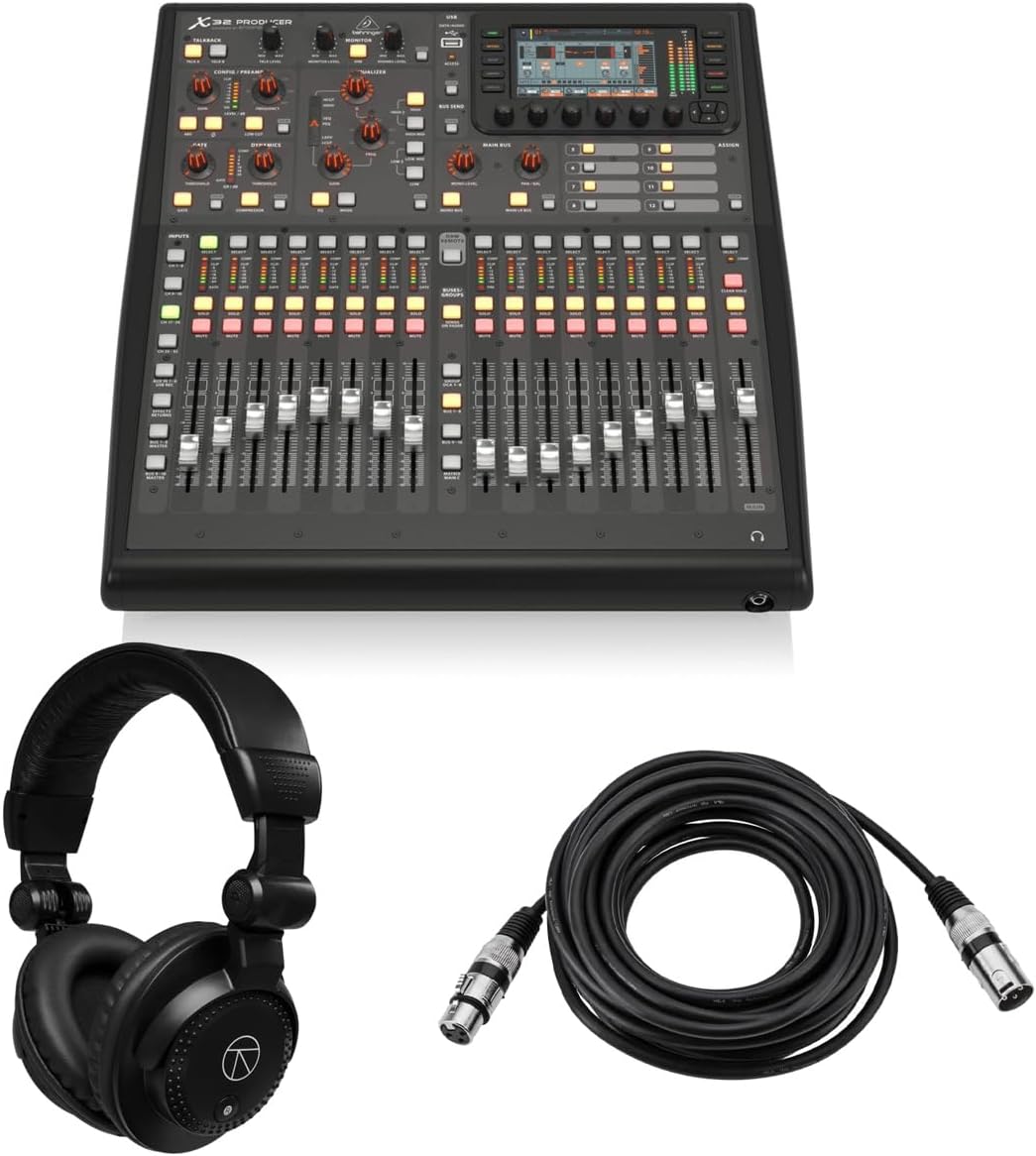
The Behringer X32 Producer delivers full digital mixing capabilities in a rack mountable format saving valuable floor space. It achieves a 5.0 rating due to its robust build and professional grade specifications. This model is perfect for permanent installations where rack space is available.
We may earn a commission when you buy through this link, at no additional cost to you.
With 40 input channels and 25 buses it matches the core specs of larger consoles. The superior sound quality comes from 16 programmable MIDAS Preamps. A 5 inch day viewable color TFT display provides clear workflow components and parameters at a glance.
Lack of motorized faders means manual adjustment is required for scenes without remote aids. The lack of physical faders can be a drawback for quick on the fly adjustments. These trade-offs are acceptable for fixed installations where automation or remote control is standard.
Installation engineers and fixed venue operators will find the X32 Producer ideal for their needs. Its durability ensures consistent performance in demanding environments. This console offers a compact yet powerful solution for professional audio setups.
Rack mountable design optimizes space in equipment racks and control rooms.
Included headphones and cable save money on essential accessories.
We may earn a commission when you buy through this link, at no additional cost to you.
The Behringer X32 Compact provides a smaller footprint without compromising on core input capabilities. With a rating of 4.7 it offers a balanced mix of features and portability. This console is suitable for mid size live events where space is a constraint.
We may earn a commission when you buy through this link, at no additional cost to you.
It features 40 input channels and 16 MIDAS designed preamps for high quality sound. The 17 motorized faders allow for instant overview and scene management. Individual dynamic LCD Scribble Strips help with easy assignment and intuitive channel distinction.
The compact layout may feel crowded when accessing multiple controls simultaneously. The screen is smaller than full sized models affecting readability. Despite this the unit retains the essential functions of its larger counterpart.
Touring sound engineers and smaller production teams will appreciate the X32 Compact. It offers a significant reduction in size while maintaining powerful routing. This model is a solid choice for those needing flexibility in a portable package.
Compact size allows for easier transport and setup in tight spaces.
Retains most features of full size consoles for professional mixing.
We may earn a commission when you buy through this link, at no additional cost to you.
The PreSonus StudioLive Classic is a versatile digital mixer designed with studio and live recording in mind. It has a rating of 3.9 stars and is known for its integrated DAW software. This console is popular among home studio owners and small recording facilities.
We may earn a commission when you buy through this link, at no additional cost to you.
It includes 12 Class A XMAX solid-state mic preamplifiers for clean gain. The Fat Channel signal processing on all channels provides essential EQ and dynamics control. An 18-in/16-out USB interface allows recording of all channels and main mixes to a computer.
The technology is older compared to newer competitors affecting feature availability. Routing options are less flexible than larger digital systems. These trade-offs are acceptable for those needing a straightforward tool for recording rather than complex live sound.
Home studio producers and podcasters will find the StudioLive useful for its all in one design. The included software streamlines the recording process. This mixer is a reliable option for entry level digital recording needs.
Included Capture software simplifies multitrack recording sessions.
Fat Channel tools provide quick EQ and compression on every input.
We may earn a commission when you buy through this link, at no additional cost to you.
The Behringer X AIR XR18 offers a budget friendly entry point into digital mixing with robust features. Rated at 4.6 it combines affordable pricing with professional capabilities. This model is ideal for those who prefer tablet based control over physical faders.
We may earn a commission when you buy through this link, at no additional cost to you.
It features 16 award-winning MIDAS designed mic preamps ensuring audiophile sound quality. The built-in tri-mode Wi-Fi router allows direct operation without external hardware. The 18 by 18 bidirectional USB interface supports recording on various devices.
Users must rely on a tablet or phone which may feel less tactile than knobs. The absence of physical faders limits immediate mixing speed for some users. These trade-offs are acceptable given the cost and convenience of the wireless setup.
Mobile content creators and small business owners will benefit from the XR18's affordability. Its ability to connect to devices simplifies remote monitoring. This console is the top budget pick for those needing quality sound on a budget.
Built-in router eliminates the need for separate network devices.
Provides high-end preamps at a very competitive price point.
We may earn a commission when you buy through this link, at no additional cost to you.
The Allen & Heath Qu-5 delivers exceptional audio quality with advanced FPGA processing. It supports 96kHz sampling rates for ultra-low latency performance. This mixer is designed for professional live sound and installed audio applications where fidelity is key.
We may earn a commission when you buy through this link, at no additional cost to you.
Flexible mixing architecture allows up to 38 inputs and 12 configurable mixes. Extensive connectivity includes AES3 digital output and USB-C multitrack recording. A 7 inch capacitive touchscreen provides an intuitive interface for controlling complex settings.
The high cost places it out of reach for casual users or small budgets. The setup process is complex for those unfamiliar with digital routing. These factors are acceptable for facilities prioritizing top tier sound quality and performance.
Recording studios and professional sound companies will find the Qu-5 unmatched for fidelity. Its processing power ensures high quality output. This console is a premium choice for demanding audio environments.
FPGA processing delivers ultra-low latency for live applications.
USB-C and AES3 options ensure modern integration with digital systems.
We may earn a commission when you buy through this link, at no additional cost to you.
The QSC TouchMix-16 offers integrated controls for simplified sound management. With a 4.4 rating it is known for its intuitive design and solid build. This mixer is excellent for small venues and community events requiring quick setup.
We may earn a commission when you buy through this link, at no additional cost to you.
It provides 4-band full parametric EQ on all input channels for precise tone shaping. Gate and compressor features are included for every channel. TRS aux outs allow direct drive of wired in ear monitors without extra amps.
DSP capabilities are limited compared to full digital consoles with more processing headroom. Lack of automation makes complex scene recalls less effective. These trade-offs suit users needing straightforward controls over advanced automation.
Event organizers and small house of worship teams will appreciate the TouchMix-16. Its simplicity reduces training time for volunteers. This console is a solid option for basic professional mixing needs.
Parametric EQ provides detailed control over sound tones.
Compact design and intuitive controls speed up event setup.
We may earn a commission when you buy through this link, at no additional cost to you.
Selecting the right digital mixing console requires understanding your specific audio production needs and technical requirements. This guide outlines critical factors to consider ensuring you invest in a system that delivers optimal performance and longevity.
Determine the number of microphones and line inputs you regularly need to connect. Ensure the console supports enough inputs and outputs for your largest typical setup.
Prioritize consoles that offer more channels than you currently need to allow for future growth and expansion.
High quality mic preamps are essential for capturing clean sound with low noise floors. Look for branded preamps known for reliability and transparency in signal reproduction.
Choose models with programmable preamps to tailor gain structures to specific microphone types effectively.
Evaluate the layout of physical controls versus screen-based menus. A balance of motorized faders and tactile knobs speeds up workflow during live shows.
Ensure the console offers an intuitive interface that matches your technical skill level to reduce setup time.
Check for USB, Ethernet, and wireless integration to match your computer and network infrastructure. Multi-channel interfaces are crucial for recording and streaming directly from the mixer.
Verify support for remote control via tablets or laptops to facilitate flexible mixing positions.
Consider the quality of the companion software for editing and saving scenes. Strong community support and regular firmware updates extend the lifespan of the console.
Select a system with software that is compatible with your operating systems and existing digital tools.
For touring applications ensure the chassis is rugged enough to withstand frequent transport. Look for robust knobs and faders that can handle heavy daily use.
Choose units with reliable components to minimize downtime and maintenance costs over time.
Assess the total cost including necessary accessories like cables and monitors. Sometimes a lower priced unit offers better long term value if it meets all core needs.
Prioritize features that directly impact your workflow over unnecessary luxuries to maximize your investment return.
Fast processing power is critical for live sound to avoid audible delays during monitoring. Look for consoles with low latency architecture suitable for real-time performance.
Ensure the DSP engine is powerful enough to handle complex effects and routing without glitches.
Start by connecting all microphones and audio sources to the appropriate inputs using quality cables. Power on the console and allow it to initialize before adjusting any levels or settings.
Use the built-in effects and EQ tools to shape the sound according to the venue acoustics. Save your preferred configurations as scenes to speed up setup for recurring events.
Keep the firmware updated to access new features and security patches. Store the unit in a dry, cool place when not in use to protect internal electronics from damage.
Digital mixers use digital signal processing to allow for more routing flexibility and recall capabilities compared to analog units. They typically include built-in effects and USB interfaces for recording which are rare in analog consoles.
No most digital mixing consoles operate independently without a computer. However a computer is useful for advanced editing recording and firmware updates.
For small venues 16 to 20 inputs are usually sufficient. Larger productions may need 32 or more inputs to accommodate multiple instruments and vocals simultaneously.
Yes many compact models offer excellent audio quality and USB interfaces ideal for home studios. They provide professional features in a smaller footprint suitable for desktop use.
Motorized faders automatically adjust to the current mix state allowing for instant recall of saved scenes. This feature significantly speeds up setup and ensures consistent sound across different events.
Many modern consoles support wireless control via built-in Wi-Fi modules or Bluetooth. This allows operators to adjust levels and settings using tablets from different locations in the venue.
The Behringer X32 and Yamaha MGX12 lead our list for their balance of features and usability. Each model offers unique strengths tailored to different production scales and budgets.
Prioritize audio quality and connectivity when selecting a mixer for professional environments. A solid investment now ensures reliable performance for years of audio work.
Remember to check current prices and availability before purchasing as they fluctuate regularly. Verify all specifications match your specific needs to ensure total satisfaction with your new system.