
Dissolved Oxygen Meter with ATC
4.3Editor score
Extended 0 to 40 mg/L range
Automatic temperature compensation included
Complete calibration kit provided
This guide compares the top dissolved oxygen sensors for water quality monitoring in aquaculture, hydroponics, and environmental research.
Dissolved oxygen sensors are critical tools for monitoring water quality in diverse applications ranging from aquariums to industrial processes. Choosing the right device ensures accurate measurements which are vital for the health of aquatic life and the efficiency of biological systems.
We evaluated ten leading models based on accuracy, ease of use, durability, and value. Each product was assessed for its sensor technology, calibration requirements, and compatibility with different environments to help you find the ideal match for your specific monitoring needs.
Every pick in this list highlights key strengths and potential limitations to guide your decision. Prices and availability change frequently so please verify current details on the product pages before making your final purchase decision today.
4.3Editor score
4.4Editor score

4.8Editor score
The following table provides a side by side comparison of all ten products featured in this guide allowing you to quickly assess their specifications and suitability for your needs.



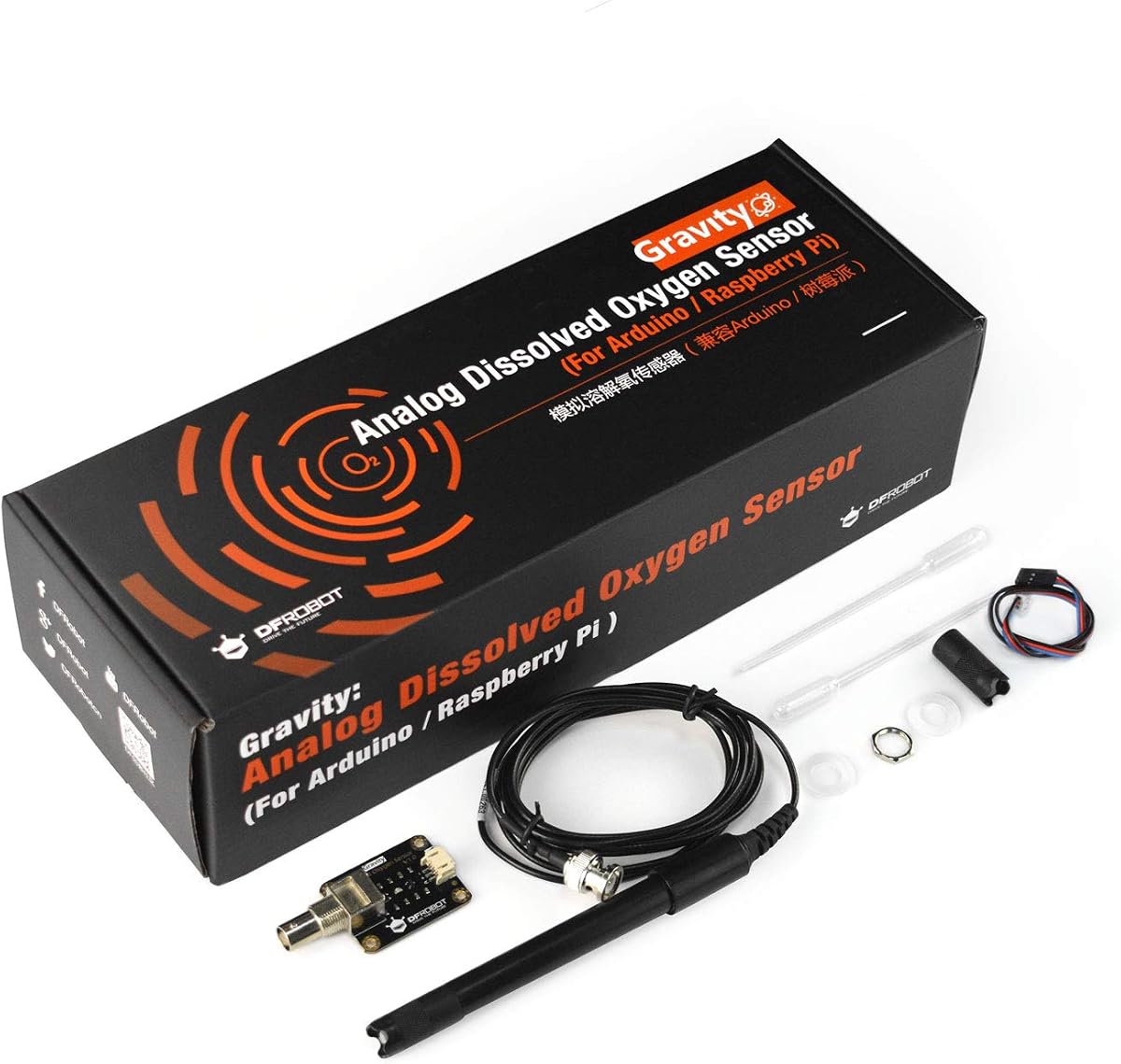
The Gravity Analog Dissolved Oxygen Sensor Kit stands out as a top choice for builders and researchers needing precise water quality data in automated systems. With a rating of 4.4 stars this product offers a galvanic probe that eliminates the need for polarization time making it ready for instant measurement anytime.
We may earn a commission when you buy through this link, at no additional cost to you.
Its hardware filtering ensures stable signals without extra software processing which is crucial for reliable IoT deployments. The kit supports a wide voltage range and uses a standard Gravity 3-pin interface simplifying connections for Arduino ESP32 and Raspberry Pi users significantly.
While the filling solution is not included due to shipping restrictions it is straightforward to prepare locally. The need for an ADC module with Raspberry Pi might be a slight hurdle but the detailed documentation and open source code make setup manageable for most hobbyists.
This kit is ideal for those building custom aquaculture monitors or hydroponic systems where continuous data logging is required. Its balance of performance ease of use and cost makes it a highly recommended solution for modern water quality monitoring projects.
The galvanic probe technology allows the sensor to provide readings immediately without waiting for stabilization which is perfect for dynamic environments.
Compatible with popular platforms like Arduino and ESP32 this kit enables easy incorporation into existing smart home or farm automation setups.
We may earn a commission when you buy through this link, at no additional cost to you.
This Dissolved Oxygen Meter with Automatic Temperature Compensation offers exceptional value for users who need reliable measurements without breaking the bank. It features an extended range of 0.0 to 40.0 mg/L which surpasses standard models and supports a wide variety of applications from home aquariums to industrial checks.
We may earn a commission when you buy through this link, at no additional cost to you.
The user friendly design allows for effortless measurement and calibration without removing the protective cover. The automatic temperature compensation ensures precise results across varying environmental conditions making it a robust tool for both novice and experienced users alike.
Although it lacks a backlight which might be inconvenient in dimly lit environments the clear digital display is sufficient for most settings. The complete package includes calibration powder and protective covers adding to the overall value proposition of this affordable meter.
It is a great choice for hobbyists and small business owners who need consistent water quality monitoring. The combination of broad range ease of use and complete accessories makes it a standout budget option in the crowded market of dissolved oxygen testers.
With a range up to 40 mg/L this meter handles diverse water quality scenarios better than many standard 20 mg/L models.
The inclusion of calibration powder and protective covers means you can start testing right away without buying additional accessories.
We may earn a commission when you buy through this link, at no additional cost to you.
The Apera Instruments AI480 DO850 Optical Dissolved Oxygen Meter Kit represents the pinnacle of convenience and reliability for serious water quality professionals. With an impressive 4.8 star rating it utilizes state of the art optical sensor technology that eliminates the need for solution refills or frequent membrane changes.
We may earn a commission when you buy through this link, at no additional cost to you.
Its IP67 waterproof and dust proof structure ensures durability even in harsh environments making it suitable for field work and industrial applications. The kit comes with a 10 ft optical probe allowing for flexible measurement scenarios without compromising on accuracy or ease of use.
While the price is higher than basic models the minimal maintenance requirements offer significant long term savings and time efficiency. The easy auto calibration process further streamlines operations reducing the risk of human error during routine testing procedures significantly.
This kit is ideal for laboratories research facilities or aquaculture operations where precision and reliability are non negotiable. Investing in this optical system provides peace of mind through consistent high quality data and reduced downtime for sensor maintenance.
Unlike traditional electrochemical sensors this optical design removes the need for regular electrolyte refills and membrane replacements saving time and cost.
The IP67 rating ensures the device can withstand harsh conditions and accidental submersion making it perfect for outdoor monitoring.
We may earn a commission when you buy through this link, at no additional cost to you.
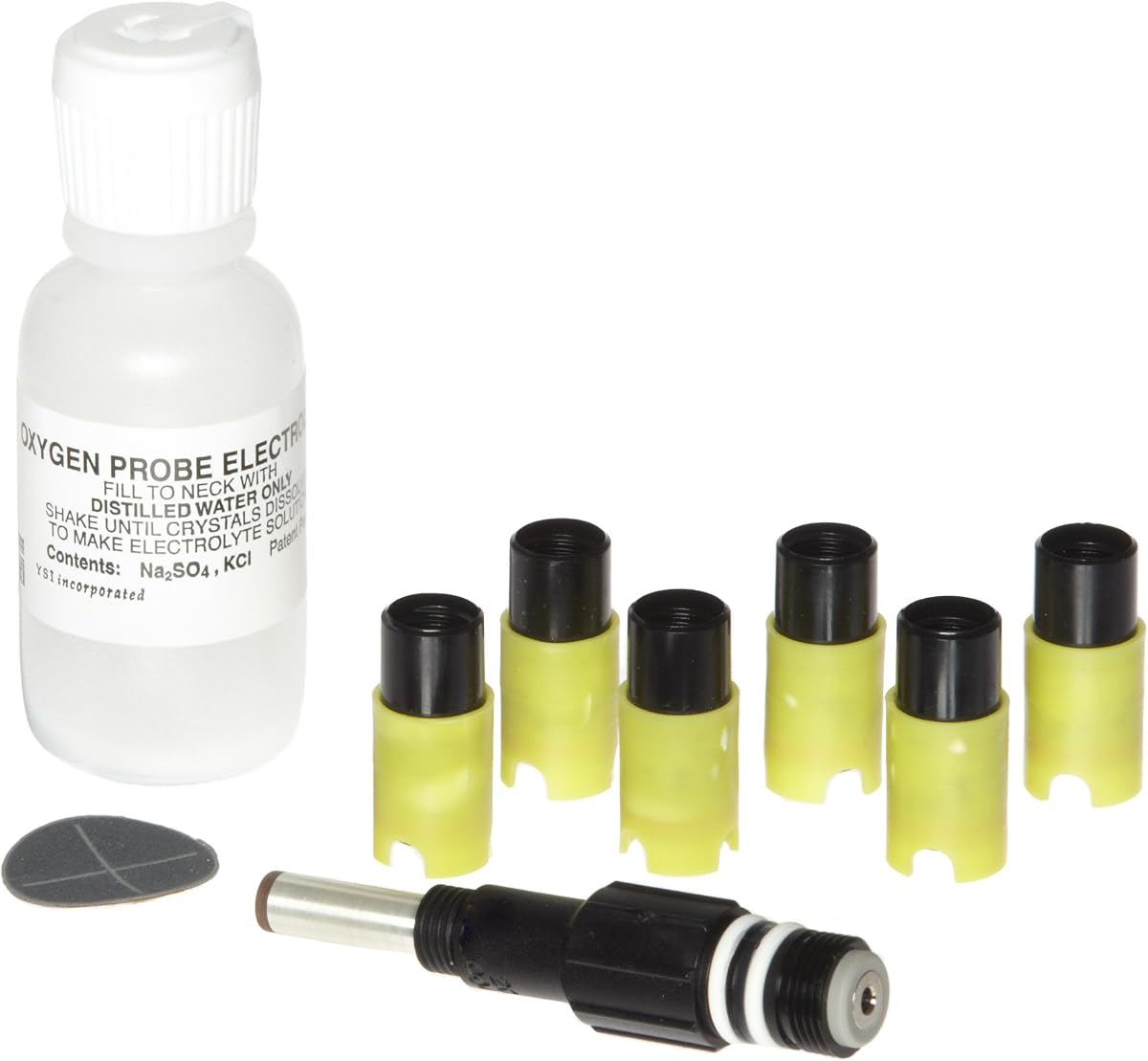
The YSI 605202 Pro Series Galvanic Dissolved Oxygen Sensor is designed for users who prioritize ease of maintenance and operational continuity. With a 4.8 star rating this sensor allows for quick replacements without tools ensuring minimal downtime in critical monitoring scenarios.
We may earn a commission when you buy through this link, at no additional cost to you.
The convenient screw on cap membranes make changing consumables simple and straightforward. The package includes multiple membrane caps and solution bottle reducing the frequency of purchases and ensuring you always have spares on hand for uninterrupted testing.
This sensor is best paired with YSI handheld or portable meters which are not included but are widely compatible. Its galvanic technology provides reliable readings without the need for polarization making it a practical choice for routine water quality checks in various settings.
Ideal for aquaculture professionals and environmental monitors the ease of maintenance is a significant advantage. By simplifying the replacement process YSI ensures that keeping your equipment running smoothly does not become a complex or time consuming task.
The design allows you to replace membranes quickly without needing any specialized tools reducing downtime during critical monitoring periods.
Galvanic sensors offer stable measurements and are less prone to drift compared to other types ensuring consistent data quality.
We may earn a commission when you buy through this link, at no additional cost to you.
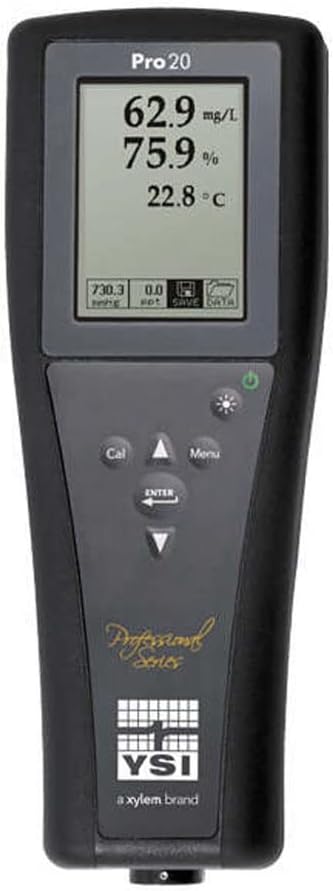
The YSI 6050020 Pro20 Handheld Dissolved Oxygen Meter is engineered for professionals who need reliable data collection in the field. Its One Touch Cal feature allows for quick calibrations within seconds saving valuable time during fieldwork where speed is essential.
We may earn a commission when you buy through this link, at no additional cost to you.
With the ability to store 50 data sets this meter eliminates the need for manual notes ensuring accuracy and ease of data transfer later. The graphic backlit display and glow in the dark keypad enhance usability in low light conditions common in environmental monitoring.
Automatic barometric pressure compensation ensures readings remain accurate regardless of altitude changes. This level of precision makes it suitable for scientific research and regulatory compliance tasks where data integrity is paramount for reporting purposes.
While it is sold as a meter only which might require additional sensors depending on your setup its robust feature set justifies the investment. For field technicians and researchers the combination of speed memory and display clarity offers a superior workflow experience.
Storing up to 50 data sets onboard allows you to focus on sampling rather than manual logging ensuring no data is lost in the field.
The backlit display and glowing keypad ensure you can read measurements easily even during early morning or evening sampling.
We may earn a commission when you buy through this link, at no additional cost to you.
The YSI 6900 ProDSS ODO Optical Dissolved Oxygen Sensor is designed for users invested in the YSI ProDSS ecosystem. It leverages optical sensor technology to provide accurate and reliable measurements with reduced maintenance compared to traditional electrochemical probes.
We may earn a commission when you buy through this link, at no additional cost to you.
This sensor integrates seamlessly with YSI ProDSS multi-parameter water quality systems offering a unified platform for monitoring various water parameters. The optical design is less susceptible to drift and offers consistent performance over time which is critical for long term monitoring projects.
While it is sold separately meaning you must already own a compatible ProDSS handheld or platform the value lies in its specialized performance. The robust construction ensures it can withstand challenging field conditions and frequent use without compromising data quality.
Ideal for environmental scientists and water quality professionals this sensor enhances the capabilities of existing ProDSS hardware. The optical technology ensures that your measurements remain precise and reliable even in demanding environments where other sensors might struggle.
Designed specifically for YSI ProDSS systems this sensor ensures compatibility and optimized performance within your existing water quality monitoring setup.
Optical sensors do not require membrane changes or electrolyte refills reducing maintenance needs and ensuring consistent accuracy over time.
We may earn a commission when you buy through this link, at no additional cost to you.
The Dissolved Oxygen Meter for Pond by EZTOCH offers a practical solution for maintaining healthy water conditions in ponds and aquaculture tanks. With a focus on aquatic life needs it helps ensure oxygen levels remain above critical thresholds to keep fish and plants thriving.
We may earn a commission when you buy through this link, at no additional cost to you.
This digital test kit includes everything you need to get started including calibration solutions and membranes. The dual unit display shows readings in mg/L and percentage saturation providing flexible options for different monitoring standards and requirements.
The 3.6 ft electrode cable allows you to take measurements deep into ponds or tanks without getting your hands wet. This feature combined with the backlit display makes it suitable for various environments from home aquariums to large scale hydroponic systems.
While it has a lower rating compared to some premium models it serves well for hobbyists and small scale operations. The included accessories and user friendly design make it an accessible entry point for anyone looking to monitor water quality effectively.
Showing both mg/L and percentage saturation allows you to choose the most relevant unit for your specific monitoring protocols.
The 3.6 ft cable lets you reach deeper water levels easily ensuring accurate readings regardless of tank depth.
We may earn a commission when you buy through this link, at no additional cost to you.
This Dissolved Oxygen Meter features an impressive 11.48 ft cable which is ideal for reaching deep tanks or difficult to access water bodies. It combines dissolved oxygen measurement with temperature and salinity checks making it a versatile tool for complex water quality analysis.
We may earn a commission when you buy through this link, at no additional cost to you.
With 99 memory storage and data hold functions it supports detailed logging for later analysis. The high resolution of 0.01 ppm ensures precise readings which are essential for sensitive applications like research or industrial water treatment processes.
The inclusion of an IRDA port allows for potential data transfer capabilities though this feature may require compatible software. The adjustable auto power off function helps extend battery life ensuring the device is ready whenever needed for testing.
For users needing detailed parameter data this meter offers significant value. The combination of long reach multi parameter capabilities and memory storage makes it suitable for serious hobbyists and professionals who require more than simple spot checks.
The 11.48 ft cable allows you to take measurements from the surface to the bottom of deep tanks without submerging the unit.
Storing 99 data points with hold function facilitates accurate record keeping and comparison of water quality over time.
We may earn a commission when you buy through this link, at no additional cost to you.
The Milwaukee MW600 LED Economy Dissolved Oxygen Meter is designed for educational and field applications where reliability and ease of use are paramount. With a clear LED display and simple two point manual calibration it provides an accessible entry into professional water quality monitoring.
We may earn a commission when you buy through this link, at no additional cost to you.
It offers a resolution of 0.1 mg/L which is sufficient for most aquaculture and environmental tasks. The +/-1.5 percent accuracy ensures you get trustworthy data for making critical decisions regarding water health and treatment requirements.
The polarographic probe with 3m cable provides flexibility for various testing scenarios. Its robust construction ensures it can withstand the rigors of field work making it a reliable companion for students and technicians alike.
This meter is particularly well suited for schools and small operations that need a durable tool without advanced features. The balance of performance and cost makes it a practical choice for routine water quality checks and educational purposes.
The two point manual calibration process is straightforward allowing users to quickly prepare the meter for accurate measurements.
Built to withstand field conditions this meter ensures reliable performance even in challenging environments.
We may earn a commission when you buy through this link, at no additional cost to you.
The YSI 605203 Polarographic Dissolved Oxygen Sensor is a professional grade component designed for laboratory and precise measurement applications. It utilizes polarographic technology which offers high accuracy and stability essential for critical testing and research environments.
We may earn a commission when you buy through this link, at no additional cost to you.
This sensor is part of the YSI Pro Series ensuring compatibility with a wide range of handheld and portable meters. Its compact and lightweight design makes it easy to handle and transport reducing physical strain during extended testing sessions.
While it requires regular calibration and maintenance typical of polarographic sensors the precision it offers is unmatched for many scientific tasks. The robust construction ensures durability even with frequent use in rigorous laboratory settings.
Ideal for scientists and quality control professionals this sensor provides the reliability needed for detailed water quality analysis. Its integration with YSI systems ensures seamless operation and data consistency across your entire monitoring workflow.
Polarographic sensors provide highly accurate readings essential for laboratory and research applications where detail is critical.
Designed to work seamlessly with YSI Pro Series meters this sensor ensures consistent performance across your equipment ecosystem.
We may earn a commission when you buy through this link, at no additional cost to you.
Selecting the right dissolved oxygen sensor requires understanding your specific monitoring needs and the technical features that matter most for your application.
Dissolved oxygen sensors primarily use polarographic galvanic or optical technologies. Polarographic and galvanic sensors require membranes and electrolytes and need periodic maintenance. Optical sensors are generally maintenance free and offer long term stability but often come at a higher cost.
Choose optical sensors for minimal maintenance and long term reliability. Choose galvanic or polarographic sensors for lower upfront costs and compatibility with existing systems.
Standard sensors cover a range of 0 to 20 mg/L which is sufficient for most freshwater applications. However if you work with hypersaline environments or industrial processes consider models that offer extended ranges up to 40 mg/L or higher.
Verify that your sensor supports the expected concentration levels in your target water to avoid saturation and inaccurate readings during operation.
Calibration accuracy is critical for reliable dissolved oxygen measurement. Look for meters with easy calibration processes such as one touch or automated two point calibration. Some models allow zero and air saturation calibration while others require specific solutions.
Prioritize devices with user friendly calibration interfaces and support for automatic temperature compensation to streamline setup and maintain accuracy over time.
Response time determines how quickly the sensor provides a stable reading after immersion. Fast response times under 60 to 90 seconds are essential for applications where water conditions change rapidly such as flow through systems.
Select sensors with quick response capabilities if your application involves dynamic water quality monitoring or if you need rapid feedback for decision making processes.
For field work or scientific research the ability to store data directly on the device is invaluable. Look for meters with memory capacity for multiple data points and connectivity options like USB or wireless to export data easily.
Choose models with robust memory and data transfer features to ensure you can track trends and generate reports without relying on manual recording methods.
The durability of a dissolved oxygen sensor is crucial especially if it will be used in harsh or remote environments. Look for waterproof and dust proof ratings such as IP67 and robust construction materials that can withstand drops and exposure to chemicals.
Prioritize sensors with high protection ratings and rugged designs to ensure longevity and reliable operation in challenging field conditions.
Consider the power source options available for the meter or sensor. Battery operated devices offer portability but require frequent replacement. USB powered or rechargeable options may be more convenient for long field sessions or stationary monitoring.
Select a power option that matches your typical usage patterns to ensure the device remains operational throughout your required measurement periods.
While the initial purchase price is important consider the total cost of ownership including replacement membranes electrolytes and calibration solutions. Optical sensors may have higher upfront costs but lower maintenance expenses over time.
Balance the upfront price with long term maintenance costs to choose a sensor that offers the best value for your specific operational needs and frequency of use.
Begin by ensuring your sensor is properly conditioned or calibrated according to the manufacturer instructions. This often involves soaking the sensor in a specific solution or allowing it to warm up for a few minutes before taking measurements.
When measuring dissolved oxygen immerse the sensor tip fully into the water sample and ensure it is free from air bubbles or debris. Wait for the reading to stabilize and record the value along with the temperature for accurate interpretation.
After use clean the sensor tip with distilled water and store it in a protective cap with moist storage solution if required. Regular maintenance such as replacing membranes and cleaning the sensor ensures consistent performance and extends the sensor's lifespan.
Most fish species require a dissolved oxygen level of at least 5 to 6 mg/L to thrive. Some sensitive species may need higher levels close to saturation. Always check specific requirements for your aquatic livestock to ensure their health and growth.
Calibrate your dissolved oxygen sensor before every major measurement session and at least once a week for regular use. If you notice drift or inconsistent readings calibrate immediately. Always follow the specific manufacturer guidelines for your model.
No optical dissolved oxygen sensors do not use membranes or electrolytes. They measure oxygen using luminescence which eliminates the need for membrane changes and reduces maintenance significantly compared to traditional electrochemical sensors.
Unstable readings can result from air bubbles on the sensor tip insufficient calibration or a damaged membrane. Ensure the sensor is clean and properly calibrated before measurement. If problems persist check the sensor for physical damage or expiration.
Yes many dissolved oxygen sensors are designed to work in saltwater but you must adjust for salinity or use a model with salinity compensation. Always check the sensor specifications to confirm it is rated for marine or saline environments.
Store your dissolved oxygen sensor in a protective cap filled with the recommended storage solution or distilled water to keep the sensor moist. Never store the sensor dry as this can damage the sensitive components and affect future accuracy.
Milligrams per liter (mg/L) measures the actual mass of oxygen dissolved in a liter of water. Percentage saturation indicates how much oxygen is dissolved relative to the maximum amount the water can hold at that temperature and pressure.
Dissolved oxygen solubility changes with temperature so the sensor must adjust readings based on water temperature to ensure accuracy. Automatic temperature compensation (ATC) allows the meter to correct for these variations without manual input.
We have reviewed ten top rated dissolved oxygen sensors ranging from affordable budget friendly options to high end professional kits. Each model offers unique strengths depending on whether you need IoT integration handheld field monitoring or laboratory precision.
Prioritize factors such as sensor type measurement range and maintenance needs when selecting your device. The right sensor will provide accurate reliable data that helps you protect aquatic life and optimize your water management processes effectively.
Please remember that prices and availability may change so verify current details on the product pages before purchasing. Investing in the right tool now ensures you have the data you need for healthy water quality control.