
MT-92H Light Meter
4.6Editor score
Split sensor lux foot candles
500ms refresh rates
Switchable backlight display
This expert guide compares the top 10 analog light meters for photography and cinematography to help you choose the right tool for accurate exposure.
Finding the right analog light meter ensures accurate exposure in photography and cinematography. These devices measure light intensity to help you set aperture and shutter speed correctly without relying on camera screens. A good meter offers reliability and precision in various lighting conditions.
We compared ten top-rated models based on accuracy, durability, and ease of use. Our analysis includes professional-grade options and budget-friendly alternatives suitable for studios and field work. Each product was evaluated for its unique features and practical applications.
Every pick showcases specific strengths to help you match a tool to your needs. Keep in mind that prices fluctuate regularly due to market demand and availability. Always check current listings before making your final purchase decision today.
4.6Editor score

4.6Editor score
5.0Editor score
The following table provides a side-by-side comparison of all ten selected analog light meters. Review each specification to understand how features vary across budget and professional models.

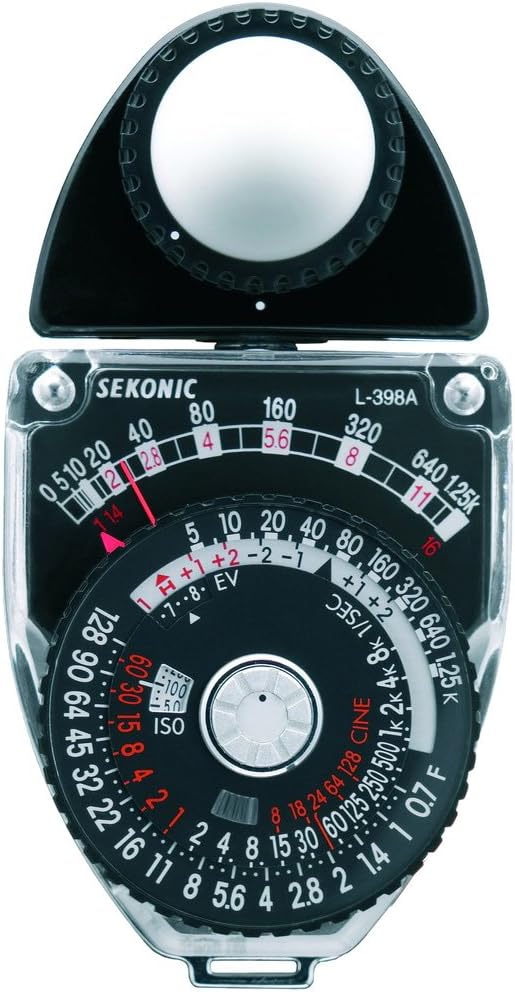


The Sekonic L-398A Studio Deluxe III stands out as a top analog light meter for professionals. It holds a 4.6 rating and features a unique battery-free design using an amorphous photocell to generate power from ambient light.
We may earn a commission when you buy through this link, at no additional cost to you.
Its full dial readout allows for instant access to aperture and shutter speed combinations without navigating digital menus. The swivel head enables precise positioning during complex setups while keeping the display visible.
The lack of battery dependency ensures you can rely on this tool indefinitely in studio or location environments. However, users accustomed to digital displays may need time to adapt to the analog calculator dial.
This model is ideal for photographers and cinematographers seeking a reliable, long-term investment. Its included accessories like the lumisphere and lumidisc make it ready for diverse lighting scenarios immediately.
The amorphous photocell eliminates the need for batteries, ensuring the meter is always ready for use.
Included accessories like the lumisphere and lumidisc allow for both incident and reflected measurements.
We may earn a commission when you buy through this link, at no additional cost to you.
This digital illuminance meter offers an accessible entry point for those needing light measurement without high costs. It measures luminosity up to 200,000 Lux and includes ambient temperature tracking in a compact body.
We may earn a commission when you buy through this link, at no additional cost to you.
Users appreciate the 4-digit color LCD screen which displays MIN and MAX readings alongside data hold functions. The high accuracy specifications make it suitable for general set design or home office adjustments.
While it lacks the analog dial of professional models, its fast response and wide range cover most common needs. The lightweight design ensures portability for casual users or those on a tight budget.
Ideal for hobbyists or office managers, this device provides reliable data without complexity. Its warranty and ease of use make it a practical choice for non-studio environments.
This meter delivers solid performance at a fraction of the cost of professional photography tools.
The ability to measure ambient temperature alongside light offers added value for environmental monitoring.
We may earn a commission when you buy through this link, at no additional cost to you.
This specific listing of the Sekonic L-398A Studio Deluxe III highlights its popularity among cinematographers. It retains the same core analog features but often bundles essential accessories like a strap and case for transport.
We may earn a commission when you buy through this link, at no additional cost to you.
The 180-degree Lumisphere allows for general readings of three-dimensional objects, while the Lumidisc provides selective area readings. The swivel head design lets you hold the button down and check levels on the set.
Its no-battery requirement ensures reliability during long shoots where changing batteries is inconvenient. The included accessories expand versatility immediately upon purchase, making it ready for professional use.
This version is perfect for professionals who value the brand reputation and durability of the L-398A. It balances classic analog operation with modern accessory needs for efficient workflow on set.
The swivel head design supports dynamic lighting checks while maintaining clear visibility of the dial.
Included items like the strap and case protect the device during field use and transport.
We may earn a commission when you buy through this link, at no additional cost to you.
The MT-92H Light Meter delivers high-precision measurements with a split-sensor design that allows flexible positioning. It refreshes every 500ms, capturing subtle light changes instantly for accurate adjustments.
We may earn a commission when you buy through this link, at no additional cost to you.
Users benefit from the dual measurement units that toggle between Lux and foot-candles with a single press. The ultra-bright backlight ensures readability in total darkness or direct sunlight during outdoor use.
While it requires standard batteries, its compact 188g profile makes it easy to carry around different environments. The resolution down to 0.1 Lux provides detailed data for scientific or technical applications.
This meter is suited for technicians and engineers needing quick, reliable readings. Its combination of speed and environmental monitoring makes it a versatile tool beyond just photography.
Separate probe measurement ensures integrity while allowing flexible positioning of the sensor head.
A switchable backlight keeps the screen readable in extreme lighting conditions like darkness.
We may earn a commission when you buy through this link, at no additional cost to you.
This high-precision illuminance meter delivers rapid readings twice per second, ideal for dynamic lighting changes. The PEAK button captures the highest light pulse value instantly for measuring lightning or lasers.
We may earn a commission when you buy through this link, at no additional cost to you.
Users can toggle between FC and LUX effortlessly to suit specific needs. The low battery alert ensures you are never caught off guard during a critical measurement session.
It is perfect for creating ideal growing environments for plants due to its accurate range. Its versatility extends to homes, offices, and factories where general light intensity checks are needed.
This tool is best for gardeners or facility managers needing quick data without complex features. Its simple interface makes it accessible for anyone needing reliable light intensity numbers.
The PEAK button locks in high-intensity pulses for accurate measurement of transient light sources.
Whether indoors or outdoors, this meter works for homes, offices, and factories seamlessly.
We may earn a commission when you buy through this link, at no additional cost to you.
The Extech LT300 offers reliable Lux and foot-candle readings with a remote sensor for hard-to-reach areas. Its large backlit LCD makes viewing easy in dim areas where precision matters.
We may earn a commission when you buy through this link, at no additional cost to you.
Advanced functions like zero adjustment and data hold let you log readings with ease. The cosine and color-corrected sensor provides accurate measurements across different lighting types.
While it is lightweight, its durable design makes it ideal for on-the-go inspections in industrial settings. It supports safe, efficient lighting decisions in workplaces and labs effectively.
This meter is designed for safety inspectors and facility managers. Its combination of remote sensing and one-handed operation helps manage energy use confidently.
The remote sensor extends measurement to high or difficult areas without moving the main unit.
Designed for comfort, allowing you to operate it quickly during inspections without fatigue.
We may earn a commission when you buy through this link, at no additional cost to you.
This meter handles both incident and reflected light readings with a digital readout in EV. The EV value is easily transferred to a setting ring for direct shutter and f-stop combinations.
We may earn a commission when you buy through this link, at no additional cost to you.
Users benefit from built-in clock functions including alarms and timers which help manage shoot schedules. Temperature read out adds environmental awareness to the lighting data provided.
It is a specialized tool often used by those needing both flash and ambient capabilities in one body. The learning curve is steeper due to its analog-digital hybrid interface.
This device suits photographers needing a dedicated flash meter with analog feel. It ensures precise control over exposure settings across different shooting scenarios.
Digital EV readout is quickly transferred to a setting ring for f-stop settings.
Built-in timers and alarms help manage shooting schedules on set efficiently.
We may earn a commission when you buy through this link, at no additional cost to you.
The Fluke 941 offers the reliability expected from a leading industrial tool brand. It delivers high-accuracy illuminance readings suitable for testing workplace safety compliance.
We may earn a commission when you buy through this link, at no additional cost to you.
Its rugged design ensures it survives in tough environments where drop or dust resistance is critical. Users trust the Fluke name for tools that perform consistently under stress.
While it lacks creative photography modes, it is perfect for ensuring efficient lighting in labs and facilities. The tester functions align with safety and energy management standards.
This meter is ideal for safety officers and facility maintenance. It provides peace of mind through consistent and reliable illuminance testing.
Built to withstand harsh conditions, ensuring longevity in industrial field environments.
Precision engineering ensures accurate data for compliance and safety checks.
We may earn a commission when you buy through this link, at no additional cost to you.
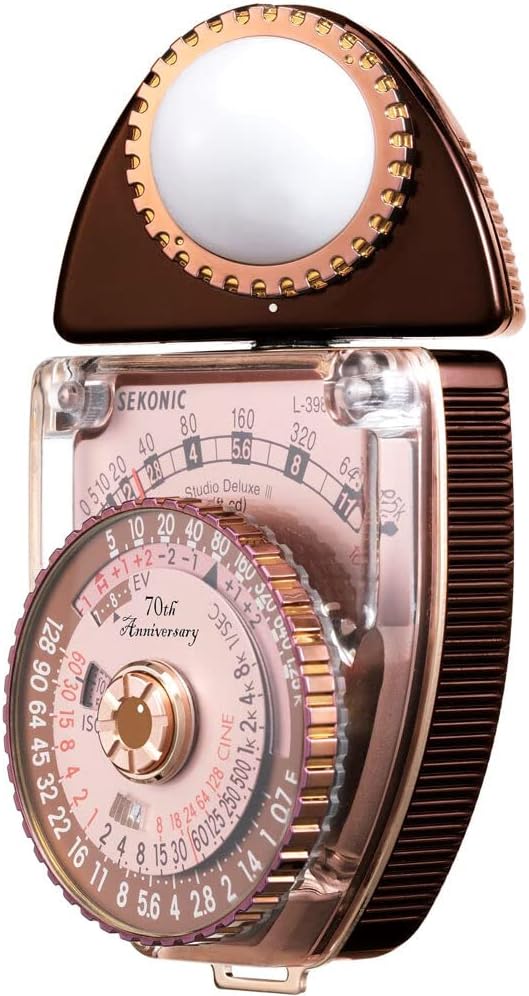
This special edition meter offers instant reading of the full range of aperture and shutter combinations. It combines the classic features of the Studio Deluxe III with a commemorative design.
We may earn a commission when you buy through this link, at no additional cost to you.
It is a favorite for those who appreciate the history and quality of the Sekonic brand. The perfect 5.0 rating reflects user satisfaction with its performance and build.
The instant readout saves valuable time during critical shots where delays cannot be afforded. It is a collector's item as well as a functional tool for serious professionals.
Choose this if you value legacy and precision in your photography workflow. It stands as a testament to decades of reliable exposure measurement technology.
Instant reading of full range combinations ensures speed and efficiency in shooting.
This limited edition celebrates years of innovation and quality in light metering.
We may earn a commission when you buy through this link, at no additional cost to you.
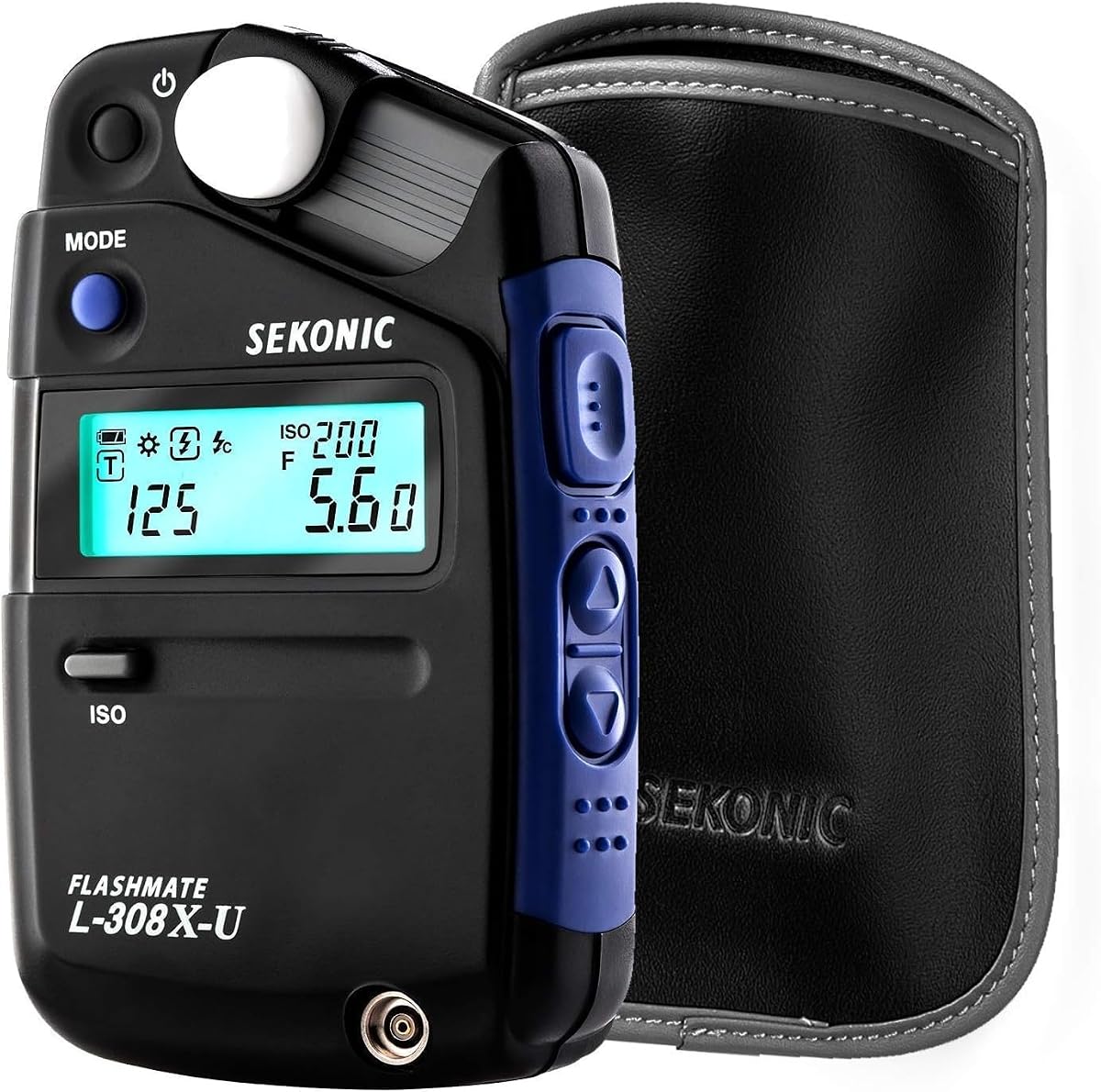
This compact digital meter offers versatile modes for Photo, Cine, and HD Cine shooting. It ensures exposures accurate down to a tenth-of-a-stop for both ambient and electronic flash.
We may earn a commission when you buy through this link, at no additional cost to you.
The HD Cine Mode supports DSLR and mirrorless videographers with shutter speed and frame rate control. Its pocket-sized design makes it easy to carry alongside any camera setup.
It supports cord and cordless flash measurement for maximum flexibility in studio or field. The auto backlight ensures you can see readings clearly in any lighting condition.
This meter is ideal for photographers who need digital convenience without sacrificing accuracy. Its versatility makes it a reliable companion for mixed media projects.
Supports DSLR and mirrorless videographers with specific frame rate and shutter speed control.
Compact design ensures it fits easily in any bag without adding bulk.
We may earn a commission when you buy through this link, at no additional cost to you.
Selecting the right meter requires understanding how different features impact your workflow and accuracy needs.
Analog meters like the Sekonic L-398A often use amorphous photocells to generate power from light. This eliminates battery dependency and ensures long-term reliability in remote locations.
Look for battery-free options if you plan to work where changing batteries is difficult.
Decide if you need incident, reflected, or both. Incident measures light falling on the subject while reflected measures light bouncing off it.
Most professionals need both capabilities for complete control over lighting.
Analog dials provide a classic experience without screens. Digital displays offer instant numeric data for quick verification.
Choose an analog dial if you prefer a tactile feel and long battery life.
Check if the bundle includes accessories like a lumisphere or carrying case. These save money and ensure you are ready to measure immediately.
A complete kit adds value and convenience for field work.
Ensure the meter covers the Lux range you need for your environment. High precision is essential for critical studio work.
Prioritize accuracy specs if you work in controlled lighting environments.
Professional tools must withstand drops and rough handling. Look for durable materials and compact designs that fit in your gear.
Select a rugged build to protect your investment over years of use.
Digital meters offer advanced features like data logging and backlighting. Analog meters are simpler and often require less power.
Choose based on your workflow preference for complex or simple interfaces.
Analog models often cost more due to specialized mechanics. Digital options may be more affordable for general use.
Balance your financial constraints with the required feature set.
To begin, position the meter at the subject's location facing the camera lens. This ensures you are measuring the light that actually reaches your subject.
Press the button and rotate the dial to align the aperture and shutter speed indicators. This gives you the combination needed for correct exposure.
Store the device in a soft case away from extreme temperatures. Keeping the dial clean ensures it moves freely and provides accurate readings.
Analog light meters often do not require batteries as they use photocells to generate power from light. They also provide a tactile dial experience that many professionals prefer over digital menus.
Place the dome at the subject position facing the camera lens. Press the measurement button to capture the light falling on the subject for accurate exposure data.
A lumisphere averages light from a wide angle to simulate how light falls on a three-dimensional subject. This is ideal for portraits or subjects lit from multiple directions.
Yes, analog meters work for video by setting exposure based on aperture and shutter angles. Many cinematographers rely on them for consistent lighting across shots.
High-quality analog meters generally stay accurate for years without calibration. However, checking against a digital standard occasionally ensures continued precision.
If the battery dies, you lose functionality until replaced. Analog models avoid this issue by using photocells to generate power from ambient light.
We reviewed ten top analog light meters for photographers and cinematographers. Each model offers unique features to help you achieve precise exposure control.
Prioritize battery-free operation and durable build quality for long-term reliability. These factors ensure your tool works when you need it most.
Remember to verify current pricing and availability before purchasing. Market conditions change quickly so always check the latest listings.