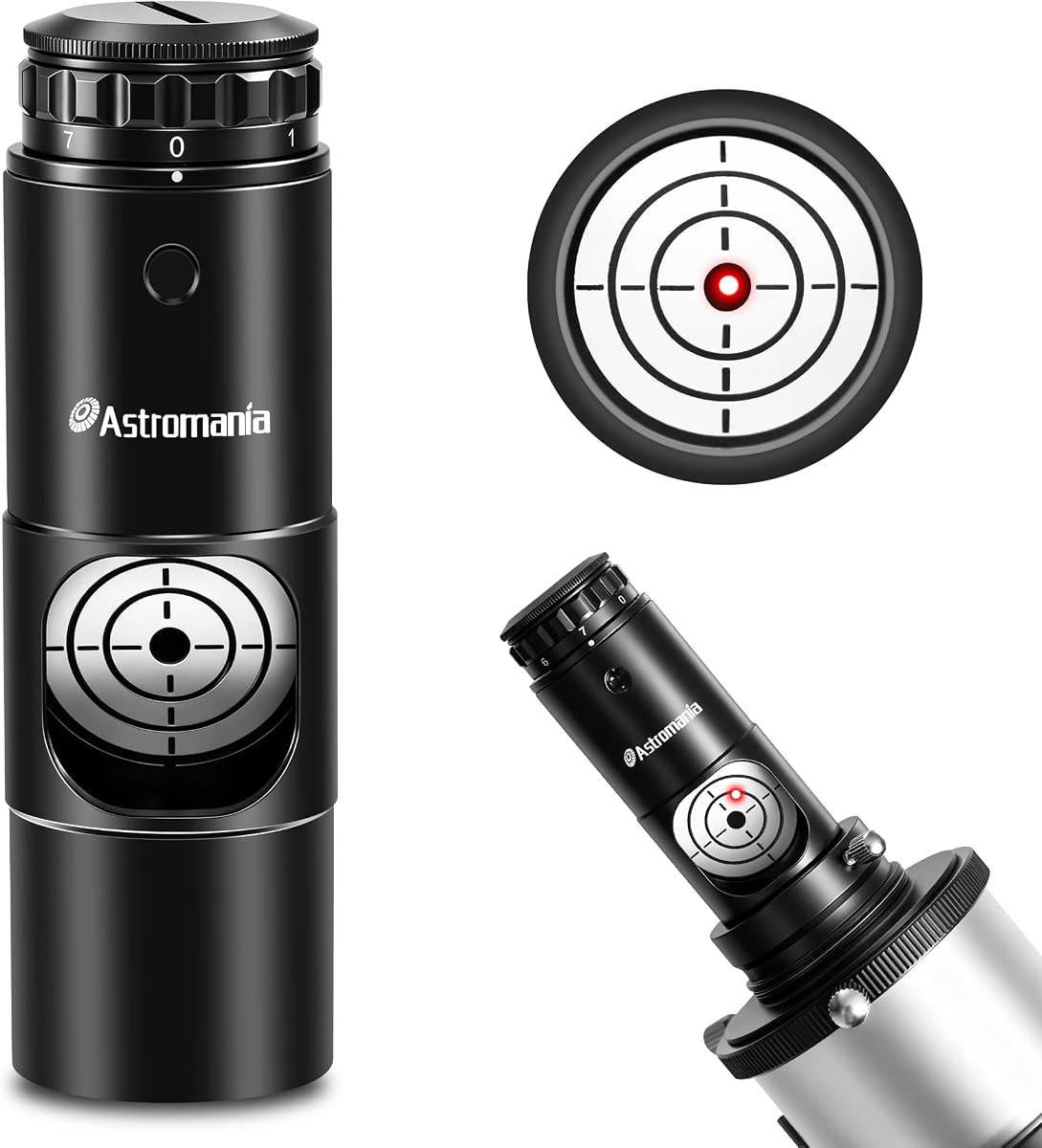
Astromania Laser Collimator 1.25"
4.5Editor score
Adjustable 7 brightness levels
Durable metal construction
Includes 2 inch adapter
Achieving sharp cosmic views requires precise optical alignment in your telescope. A laser collimator for telescope alignment ensures light travels straight through the optics, maximizing clarity and detail for every observation session.
We evaluated ten top-rated models based on construction quality, beam accuracy, ease of use, and user feedback. This list covers budget-friendly options to professional-grade tools designed for various Newtonian reflector telescopes.
Each pick highlights key features and performance traits to guide your decision. Note that availability and pricing may fluctuate, so verify details before purchasing to ensure you get the right tool for your setup.
4.5Editor score
4.7Editor score

As an Amazon Associate we earn from qualifying purchases.
The following table provides a quick side-by-side comparison of all ten laser collimator for telescope alignment models reviewed in this guide to help you identify the best fit for your specific telescope setup.


This Astromania laser collimator for telescope alignment stands out with a 4.5 star rating and robust build quality. It ensures precise Newtonian optics alignment for sharper views in minutes without complex tools.
We may earn a commission when you buy through this link, at no additional cost to you.
The device features a removable 2 inch adapter allowing use with standard 1.25 and 2 inch focusers seamlessly. With seven brightness levels and a durable metal body it adapts to any observing environment reliably.
While highly accurate the small adjustment screws need careful manipulation to maintain calibration. The included battery is convenient but might wear out over time requiring replacement for continued use.
Astrophotographers and beginners alike will appreciate the clarity this tool brings to collimation. It delivers professional results quickly making it a top choice for Newtonian reflector owners seeking reliability.
The built-in window and opening allow direct beam monitoring ensuring the laser reflects perfectly for optimal alignment.
Swapping between 1.25 and 2 inch setups is seamless thanks to the included removable adapter.
We may earn a commission when you buy through this link, at no additional cost to you.
For cost conscious observers this Astromania model offers excellent entry-level collimation performance with a 4.5 rating. It simplifies aligning reflector telescopes efficiently without breaking the bank.
We may earn a commission when you buy through this link, at no additional cost to you.
The unit boasts premium metal construction resisting wear while the seven brightness levels adjust to day or night conditions easily. Its compact form fits perfectly in your palm for smooth handling.
However it only supports 1.25 inch focusers limiting growth unless you upgrade later. Some internal components may feel basic but they hold up well under regular use.
Beginners looking for a reliable starter tool will find this ideal. It provides clear guidance and consistent results ensuring your telescope performs at its best right away.
Lightweight design allows easy transport to dark sky sites without adding bulk to your kit.
Seven levels ensure visibility indoors or under dark skies for accurate adjustments.
We may earn a commission when you buy through this link, at no additional cost to you.
This SVBONY laser collimator delivers reliable performance with a 4.5 rating making it a popular choice. It supports both 1.25 and 2 inch focusers providing flexibility for various telescope upgrades.
We may earn a commission when you buy through this link, at no additional cost to you.
Built with a solid metal body it ensures long-term use without wear issues. The triple cemented lens improves red dot stability while seven brightness levels adapt to all lighting scenarios.
While robust the instruction manual could offer more step-by-step guidance for absolute beginners. Its weight is slightly higher but contributes to the sturdiness you expect.
Upgrading to a 2 inch focuser is seamless thanks to the included adapter. This model strikes a great balance between durability and versatility for reflector owners.
The triple cemented lens ensures the red dot remains steady for precise alignment checks.
Switch from 1.25 to 2 inch setups without buying a new collimator later.
We may earn a commission when you buy through this link, at no additional cost to you.
This bundle combines a red laser collimator with a wide angle eyepiece for a complete viewing experience. It offers Class I safety and a metal build for reliable reflector alignment.
We may earn a commission when you buy through this link, at no additional cost to you.
The 62 degree eyepiece enhances your field of view significantly. With seven brightness levels and a removable 2 inch adapter it adapts well to different observing conditions.
Being newer the product has fewer reviews than others but specifications suggest strong quality. The included eyepiece adds value though compatibility varies by brand.
Beginners will appreciate the all-in-one nature of this package. It provides both alignment and viewing tools making it a convenient purchase for new setups.
The included 62 degree eyepiece offers a stunning immersive view across the field.
Class I laser safety standards ensure eye protection during alignment sessions.
We may earn a commission when you buy through this link, at no additional cost to you.
This Alstar collimator is noted for its simplicity and portability with a 4.5 star rating. It simplifies alignment for Newtonian telescopes using a 1.25 inch focuser.
We may earn a commission when you buy through this link, at no additional cost to you.
The unit features seven brightness levels for various light conditions and a solid metal body to resist wear. Instructions are provided in both German and English for clarity.
However it does not come with a battery so you must supply your own. Its focus on 1.25 inch focusers limits use if you plan to upgrade later.
Newcomers will find this straightforward tool easy to handle. It delivers accurate collimation quickly making it a practical choice for entry-level reflector owners.
Bilingual instructions ensure clear guidance for users regardless of language preference.
Lightweight design makes it easy to carry to any observing location.
We may earn a commission when you buy through this link, at no additional cost to you.
This model offers versatility by supporting both 1.25 and 2 inch focusers with a 4.0 rating. It includes an adapter and battery making it ready to use out of the box.
We may earn a commission when you buy through this link, at no additional cost to you.
The metal body provides durability while seven brightness levels ensure visibility in any setting. Triple cemented lenses offer stable beam projection for precise alignment checks.
Some users report adjustment screws needing occasional tightening to maintain calibration. The rating reflects this minor issue but overall performance remains strong for the price.
Those wanting flexibility for future upgrades will value the included 2 inch adapter. It provides solid collimation performance for reflector telescopes at a reasonable cost.
Includes battery and adapter saving you extra purchases before starting.
Supports both standard and larger focusers for long term use.
We may earn a commission when you buy through this link, at no additional cost to you.
This bundle adds a cell phone adapter for astrophotography alongside the laser collimator earning a 4.4 rating. It helps users capture images while aligning optics.
We may earn a commission when you buy through this link, at no additional cost to you.
The adapter supports phones from 25 to 48mm eyepiece diameters including various models. The collimator itself offers seven brightness levels and a sturdy metal build for reliability.
However the phone adapter does not fit 2 inch eyepieces which limits scope compatibility. Some users may find the setup slightly complex initially.
Photographers wanting to document views will appreciate this extra functionality. It combines alignment and imaging capabilities in one convenient package for Newtonian reflectors.
The included adapter lets you attach your phone for recording views easily.
Solid body ensures the laser stays calibrated during transport and use.
We may earn a commission when you buy through this link, at no additional cost to you.
This bundle combines a laser collimator with a Cheshire eyepiece achieving a perfect 5.0 rating. It offers two methods for alignment ensuring accurate results under any condition.
We may earn a commission when you buy through this link, at no additional cost to you.
The Cheshire eyepiece works without batteries using ambient light for daytime alignment. The laser provides seven brightness levels for night use both housed in durable metal bodies.
Cheshires need light to function so they are less effective in total darkness. The cost is higher but the dual approach ensures thorough collimation every time.
Observers wanting comprehensive tools will find this pairing unmatched. It covers both day and night alignment needs effectively for reflector telescopes.
Use the Cheshire for daylight and laser for night to cover all scenarios.
The Cheshire requires no power source ensuring you never get stuck without tools.
We may earn a commission when you buy through this link, at no additional cost to you.
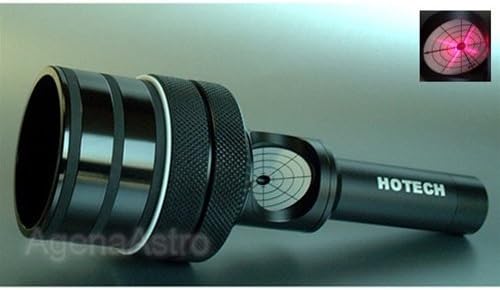
The HoTech SCA collimator stands out with patented self-centering technology ensuring zero slop during alignment. It earns a 4.7 rating for its unmatched precision for serious astronomers.
We may earn a commission when you buy through this link, at no additional cost to you.
Unlike others it removes play between the tool and focuser for perfect accuracy. The factory calibration is reliable and it works with all major telescope brands.
The price is higher and it uses a CR123 battery which may be less common. These are minor trade-offs given the superior mechanical design and results.
Imagers and professionals will value the repeatable accuracy. It delivers the cleanest beam alignment available making it a premium choice for demanding optics.
The patented adapter locks perfectly in place eliminating any movement for exact results.
Works seamlessly across all major focuser brands without special tools.
We may earn a commission when you buy through this link, at no additional cost to you.
This electronic collimator uses software to guide alignment with pixel-level precision. It supports Newtonian and Schmidt Cassegrain scopes offering a modern approach to telescope collimation.
We may earn a commission when you buy through this link, at no additional cost to you.
Factory calibrated to high standards it pairs with a smartphone for real-time adjustments. The built-in software simplifies the process ensuring accurate results without manual guesswork.
Being new user reviews are limited and setup depends on having a compatible phone. However the technology promises the highest accuracy available on the market.
Tech savvy observers will find this futuristic tool invaluable. It bridges the gap between traditional alignment and digital precision for modern imaging sessions.
Guided calibration circles on screen make adjustments intuitive and precise.
Pixel-level precision ensures your optics are perfectly aligned for imaging.
We may earn a commission when you buy through this link, at no additional cost to you.
Selecting the right laser collimator for telescope alignment requires understanding your telescope's focuser type, required precision, and budget. This guide outlines key factors to help you choose a reliable tool.
Ensure the collimator fits your telescope's focuser size. Most standard 1.25 inch models work with entry-level scopes but upgrading to a 2 inch adapter expands compatibility for larger eyepieces.
Choose a model with a removable 2 inch adapter if you plan to upgrade or use dual focusers.
Metal construction like aluminum ensures durability and thermal stability. Plastic models may warp under temperature changes affecting calibration accuracy over time.
Look for anodized finishes that resist wear and tear in outdoor observing conditions.
Adjustable brightness levels let you adapt to bright indoors or dark sky conditions. Seven levels provide flexibility ensuring the laser is visible without being blinding.
Select units with at least five brightness options for maximum versatility in different environments.
Class 3R or Class I lasers are safest for eye protection. Always check output power to avoid accidental exposure which can cause long-term vision damage.
Verify compliance with safety standards before purchasing to ensure safe operation for all users.
CR2032 and CR123 batteries are common. CR2032 is easier to find but CR123 offers longer life for high-end units. Check if batteries are included with the purchase.
Opt for models including batteries to start aligning immediately without extra trips to the store.
Precision screw adjustments allow calibration corrections. Sealed openings protect internal mechanisms but require care during adjustment.
Look for units with accessible adjustment screws to maintain long-term accuracy without disassembly.
Some bundles include eyepieces or phone adapters for imaging. These add value but ensure they match your specific telescope setup and needs.
Consider your workflow before buying extras; a Cheshire eyepiece aids daylight alignment.
Entry-level units suit casual observers while premium tools offer higher accuracy for imaging. Determine how much precision you need based on your astronomical goals.
Invest in higher-end models like HoTech if you need repeatable calibration for astrophotography.
Insert the laser collimator into your telescope's focuser until it clicks or fits snugly. Ensure the battery is properly installed and the laser is turned on to emit a beam.
Adjust the tilt screws on the secondary mirror until the red dot aligns with the primary mirror's center spot. Use the side window to verify the beam reflects back to its source.
Store the collimator in a padded case to prevent scratches or internal misalignment. Avoid dropping or exposing it to extreme temperatures that could affect calibration.
Proper alignment ensures light travels straight through your optics, maximizing image clarity and sharpness. Without it, stars appear blurred and details in nebulae are lost, reducing the telescope's potential.
Collimate your telescope at least once per observing session especially after transport. Minor bumps can shift optics so checking alignment ensures optimal performance every time you use it.
No laser collimators are designed for reflector telescopes with secondary mirrors. Refractors generally come factory-aligned and require different tools like a coma corrector if needed.
Drifting usually indicates loose internal components or thermal instability. Ensure the unit is made of metal and tightened properly. If it persists, recalibrate using the adjustment screws.
No some fit only 1.25 inch focusers. Look for a removable 2 inch adapter in the package to ensure compatibility with larger focusers without needing to buy a new tool.
Always supervise children when using laser tools. Even Class 3R lasers can damage eyes if viewed directly. Teach them proper handling to prevent accidental exposure.
From budget Astromania models to premium HoTech precision tools each collimator offers unique benefits. The top picks balance quality, ease of use, and accuracy for various observing needs.
Prioritize build quality and compatibility with your focuser size. Investing in a durable tool ensures long-term reliability and sharper views for your astronomical adventures.
Remember to check current availability and pricing before purchase. Conditions change regularly so verify the latest details to secure the best value for your telescope setup.